Where the Highway Lets Go: How Japan's Roadside Stations Quietly Became Town Squares
Ask an American what a rest stop is and you'll get a shrug and a description of a vending machine, a gas pump, and a bathroom of questionable ambition. Ask someone from rural Japan the same question and there's a decent chance they'll invite you to lunch.
Michi no eki translates, flatly, as "roadside station." That translation has been sanding the life off these places for thirty years.
The Building That Ended Up Being the Living Room
Japan began registering michi no eki in 1993, and there are now more than 1,200 of them strung along the country's highways and mountain roads. Registration isn't automatic. A site has to provide parking, restrooms, and — this is the part that matters — something that genuinely serves the community around it.
That third requirement is where the whole thing gets interesting. Because a michi no eki can't just be a convenience store with better landscaping. It has to sell the local produce, host the local events, and function as a place residents actually use on a Tuesday afternoon when no tourists are anywhere nearby.
So you get buildings that are half market, half town hall, half grandma's kitchen. (Yes, that's three halves. Go inside one and you'll understand.)
What's Actually on the Shelf
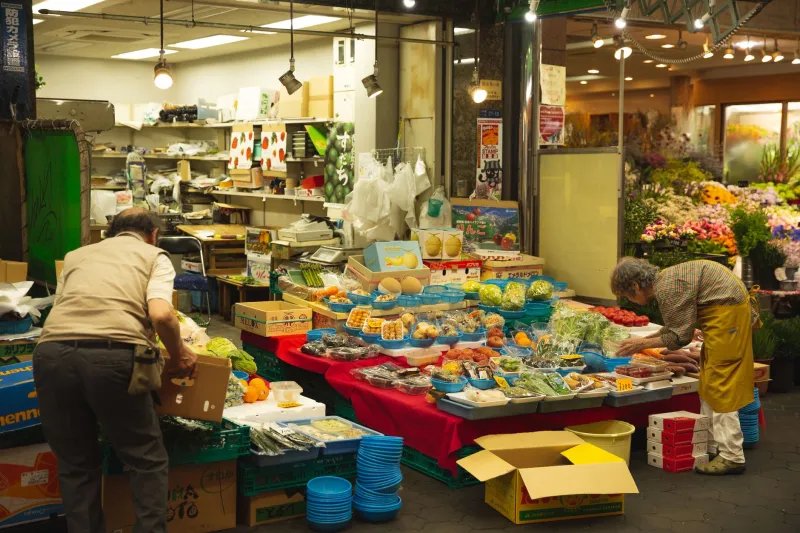
Nearly every michi no eki has a chokubaijo — a direct sales counter — where local growers sell whatever came out of the ground that morning. The label on a bag of cucumbers usually carries the farmer's name, sometimes their photo, occasionally a small handwritten note about how to cook them.
You will find things you have never seen in a US farmers market:
- Pickles in every color, sold by the bag, not the jar
- Eggs with shells so dark they look dipped in tea
- Miso from a factory that's three buildings down the road
- Rice sold by the kilo, with the variety and the harvest year printed on the bag
- Soft-serve ice cream flavored with wasabi, sake lees, or purple sweet potato
- Bento boxes assembled at 8 a.m. and gone by noon
Prices are low in a way that feels almost rude. You pay cash. The register is usually being run by someone's grandmother, and she will not be impressed by your card.
Read the Notice Board Like a Local
The bulletin board near the entrance is the most honest piece of journalism in town. That's not a metaphor — in rural Japan, a printed notice taped to a board at the roadside station still carries real weight.
You'll see funeral and memorial service announcements, kabu (neighborhood association) meeting notices, sign-ups for rice-planting or shrine-cleaning volunteer days, announcements for the autumn festival, a lost dog, a request for someone to help an elderly neighbor with gutters.
For a traveler, this is a live feed of what's happening in the town you're standing in. If you can read even a little Japanese — or use your phone — you can find out that there's a lantern festival in eleven days, or that a local potter is opening her studio on Sunday. No travel app knows that. The corkboard does.
The Practical Playbook
Timing. Arrive between 9 and 10 a.m. if you want the produce. Arrive at 11:30 if you want the hot food. Arrive after 3 p.m. and you'll get the dregs and the honest truth about which items didn't sell.
Cash and coins. Bring both. Some smaller stalls still run on an honor box, and you'll need coins for the vending machine outside.
Bring a bag, maybe a cooler. Nobody's going to stop you from buying four kilos of persimmons. Nobody's going to help you carry them either.
Stamp your book. Many stations have a rubber stamp (eki-in) for collectors. It's a cheap, weirdly satisfying hobby and it's a great excuse to stop at more of them.
Park the car and keep walking. This is the advice almost nobody gives. The best michi no eki sit a five- or ten-minute walk from the old shopping street, the temple, or the river. The station is the front door, not the destination. Leave the car and go find the town.
Buy something small even if you only stopped for the restroom. It's not a rule, it's just good manners, and it costs about the price of a coffee.
Watch the photos. The vegetables are fair game. The person selling them isn't. Ask first, or just buy something and let the conversation happen naturally.
Pack out your trash. Public bins are rare and often nonexistent. This isn't neglect — it's a system that assumes you'll take responsibility for what you brought.
Why It Changes the Shape of a Road Trip
Most American road trips treat the highway as a conveyor belt between two points of interest. Japan's roadside stations turn that conveyor belt into a thread: every ninety minutes there's a place where the local economy pokes its head out and says something.
You don't have to plan around them. You don't have to book anything. You just have to pull off, walk in, and pay attention to what's on the shelf and what's taped to the wall. It's the least organized, most genuine introduction to rural Japan that exists — and it's free, and it's already on your route.