She's 84, Lives in a Mountain Village, and She Might Change Your Entire Life
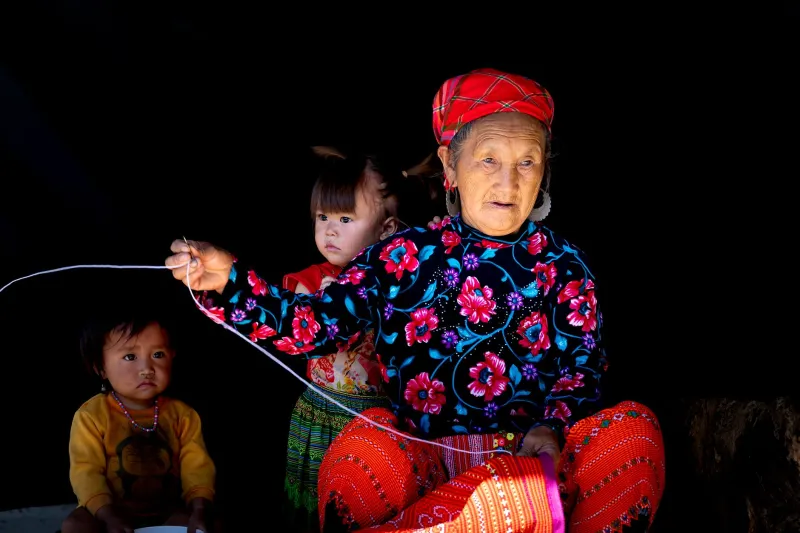
Katie Marsh didn't fly to Japan looking for a life coach. She came looking for quiet — specifically, the kind of quiet she'd read about in a travel essay about Gifu Prefecture, where old farmhouses sit so still in winter you can hear snow land. What she found instead was Fumiko-san, an 84-year-old woman with a laugh like a screen door and hands that moved through every task — pickling, folding, sweeping — like she'd personally invented the concept of efficiency.
"I spent three weeks with her," says Katie, a 38-year-old graphic designer from Portland, Oregon. "By the end, I'd rethought my entire relationship with time. I don't know how else to say it."
Katie isn't alone. Talk to enough Americans who've spent real time in rural Japan — not just a few nights at a ryokan, but actual weeks embedded in village life — and a pattern emerges. Again and again, it's the older women who leave the deepest mark. The grandmothers. The great-aunts. The 70-something neighbor who appears with a tray of food every single morning without being asked. These women, who in Western contexts might be described as "retired" or "elderly," are operating with a kind of intentional, grounded energy that stops visitors cold.
What Nobody Told You About Aging in Rural Japan
In the United States, aging — especially for women — tends to get framed as a process of subtraction. You lose your career, your physical abilities, your cultural relevance. The dominant story is one of decline, of stepping aside, of eventually becoming a burden. Rural Japan tells a completely different story.
The older women who anchor these communities aren't stepping aside from anything. They're the ones who know how to prep the ceremonial ingredients for the autumn festival. They're the ones the younger villagers call when the fermenting crock smells wrong. They carry genealogical knowledge, folk remedies, weather intuitions, and social histories that no app can replicate. Their relevance isn't despite their age — it's inseparable from it.
For Americans raised on a culture that treats 65 as the beginning of the end, this reframe can be genuinely disorienting.
"I kept waiting for Michiko-san to seem tired of things," recalls James Okafor, a 44-year-old teacher from Atlanta who spent four months in a small town in Nagano Prefecture through a community residency program. "She was 79. She woke up earlier than me, worked longer than me, and seemed more curious about the world than half my colleagues back home. At some point I just asked her: don't you ever feel like you're done? She looked at me like I'd said something in a language she'd never heard."
Learning by Doing — Very, Very Slowly
The mentorship these women offer doesn't come through lectures or scheduled sessions. It happens in the kitchen, in the garden, at the side of a loom. It's embodied, practical, and deeply patient in a way that American productivity culture has essentially declared obsolete.
Katie describes learning to make nukazuke — vegetables fermented in a rice bran paste — with Fumiko-san over the course of two weeks. "There was nothing to learn in the first three days. She just let me watch. Then she let me touch the bran. Then she corrected my hands without saying anything — just repositioned them. By the time I understood what I was doing, I realized I'd also learned something about how to actually pay attention to things."
This slow transmission of knowledge is itself a kind of philosophy. In Japanese craft and domestic traditions, the body learns before the mind does. Mastery isn't explained; it's absorbed. For Americans accustomed to YouTube tutorials and 10-step frameworks, the experience can feel frustrating at first — and then, for many, profoundly liberating.
"I stopped asking 'why' so much," says James. "Not in a passive way — more like I started trusting the process of doing. Michiko-san had been making miso for sixty years. She didn't need to explain it. She needed me to be present enough to receive it."
The Philosophy Nobody Wrote Down
Beyond the practical skills, what Americans consistently describe absorbing from these relationships is harder to name. It has something to do with the way these women move through their days — unhurried but never idle, connected to seasonal rhythms, entirely unbothered by the cultural anxieties that exhaust so many people in their thirties and forties.
There's a concept in Japanese culture sometimes described as ikigai — a reason for being, the thing that makes getting up worth it — and while the word has been thoroughly Instagram-ified in the West, encountering it through an 80-year-old woman who's never once Googled it is an entirely different experience.
"Fumiko-san's ikigai wasn't a vision board," Katie says, laughing. "It was her bran bed. Her plum trees. The neighbor kids who came by on Saturdays. She wasn't optimizing anything. She was just completely inside her own life."
For a generation of Americans drowning in self-improvement content and quietly terrified of meaninglessness, that kind of completeness reads as almost radical.
Why It Hits Different Coming From Her
There's something worth naming about the specific dynamic at play here: these are older women, often widowed, living in communities that the outside world tends to overlook or pity. They're not celebrities, not influencers, not thought leaders. They have no platform. And that, paradoxically, is part of what makes their influence so potent.
When Fumiko-san shows you how to press the air out of a pickle jar, she isn't performing wellness. When Michiko-san wakes up at 5 a.m. to tend her garden, she isn't optimizing her morning routine. The absence of self-consciousness — the sheer thereness of these women — creates a kind of mirror that many visitors find unexpectedly confronting.
"She made me realize how much of my life I was living for an audience," James says. "Not consciously. But I was always narrating it to some imaginary observer. She had no imaginary observer. She was just living."
Finding Your Own Fumiko-san
If you're traveling to rural Japan with any kind of openness, these connections can happen organically — especially if you stay in family-run accommodations, participate in local activities, or spend time in communities that practice minpaku (home-stay hosting). Slow down your itinerary. Eat where the locals eat. Say yes to the things that seem small.
Organizations that facilitate rural residencies and community exchange programs often create natural conditions for these kinds of relationships. Volunteer programs tied to agriculture, traditional crafts, or elder care can open doors that a standard tourist visa never would.
And if you find yourself sitting across a low table from a woman who's seen eight decades and doesn't seem remotely finished with the world — put your phone down. Whatever she's about to teach you probably isn't on the internet.