Before You Even See It, Your Nose Already Knows: The Scents of Rural Japan That Hit Americans Somewhere Deep
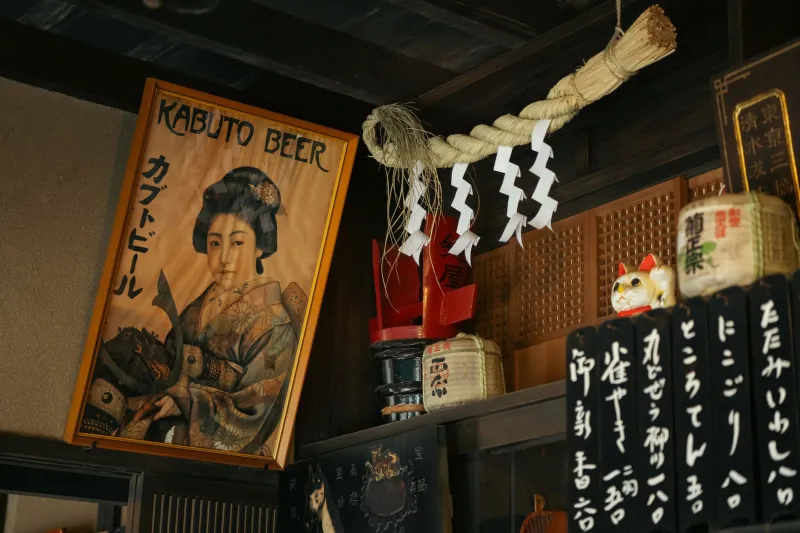
Sarah Okonkwo had done her research. She'd read the guidebooks, watched the documentaries, bookmarked the Instagram accounts. She thought she knew what to expect from her first visit to a traditional farmhouse in the Hida region of Gifu Prefecture. What she didn't expect was to walk through the front door, catch one breath of the interior — old cedar, charcoal smoke, something earthy and fermented she couldn't name — and immediately burst into tears.
"I've never been to Japan in my life," she said, still sounding a little bewildered when she recounted the story months later from her apartment in Portland. "I grew up in suburban Ohio. There is no rational explanation for why that smell made me feel like I was walking into my grandmother's house. But it did."
She's not alone. Talk to enough Americans who've wandered off the tourist trail into Japan's rural interior — the mountain villages, the coastal fishing towns, the rice-farming valleys — and you'll hear some version of this story over and over. The visuals are stunning, sure. The food is revelatory. But it's the smells, again and again, that seem to reach people in a way nothing else quite does.
Why Smell Goes Straight to the Gut
There's actual neuroscience behind this, and it's pretty wild. Dr. Rachel Fenn, a cognitive neuroscientist at the University of Michigan who studies olfactory memory, explains that the nose has a kind of VIP pass to the brain that other senses simply don't have.
"Every other sensory input — sight, sound, touch — gets routed through the thalamus before it reaches the areas of the brain involved in emotion and memory," she says. "Smell bypasses that relay station entirely. It goes directly to the amygdala and the hippocampus. That's the emotional core, the memory archive. It's the most ancient wiring we have."
This is why a particular scent can trigger a memory or an emotion before your conscious mind has even registered what you're smelling. It's involuntary. It's fast. And it's deeply personal in ways that are hard to articulate.
What makes rural Japan such potent territory for this kind of experience, Fenn suggests, is the sheer density and layering of its scent environment — and how different that environment is from what most Americans walk through every day. Strip malls and climate-controlled offices don't exactly prime the olfactory memory. But a 200-year-old farmhouse with a dirt floor and a still-functional irori hearth? That's a different story entirely.
The Vocabulary of Rural Japan's Smell
Spend a few days in Japan's countryside and you start building an involuntary catalog. There's the particular sharpness of cedar and cypress in a freshly opened wooden structure — a smell that's almost medicinal, clean in a way that synthetic air fresheners spend their whole lives trying to fake. There's the warm, living funk of a miso brewery, where enormous cedar vats hold fermenting soybean paste that might have been started before your grandparents were born.
There's the smell of rain on tatami — a grassy, slightly sweet scent that is genuinely unlike anything in the Western sensory vocabulary. There's wood smoke from a farmhouse kitchen that has been absorbing decades of cooking into its walls and beams. There's the forest air in a cedar grove at altitude, so clean it almost stings.
Kazuko Nishimura has been making handcrafted incense in a small workshop in Nara Prefecture for over thirty years. She's noticed something in recent years: more and more of her customers are foreign visitors, and many of them are Americans who discovered her shop almost by accident and then found themselves unable to leave.
"They stand there and they smell things and they get very quiet," she says, laughing softly. "Sometimes they cry. I always think, what is happening inside them? What are they remembering that they didn't know they had?"
That question — what are they remembering that they didn't know they had — might be the most interesting one in the room.
Memory That Doesn't Belong to You
Dr. Fenn has a theory about why these cross-cultural scent experiences can feel so strangely personal. "There's a concept sometimes called 'inherited memory' or 'cultural olfactory priming,'" she explains. "We don't fully understand it yet, but the idea is that certain scents — particularly those tied to fundamental human activities like fermentation, fire, wood, and earth — may trigger responses that go beyond individual experience. They may tap into something much older."
In other words, the smell of a wood fire or a fermenting vessel might resonate not because you personally remember it, but because human beings have been responding to those smells for tens of thousands of years. Rural Japan, which has maintained many of its traditional material practices far longer than most of the industrialized West, is one of the few places left where you can walk into that ancient olfactory world more or less intact.
For Americans in particular — a culture that has undergone rapid and repeated cycles of displacement, reinvention, and suburban homogenization — this can land with unexpected force.
How Artisans Are Paying Attention
Some of Japan's rural craftspeople and food producers have started to notice the effect their work has on foreign visitors, even if they frame it differently than a neuroscientist would.
Takeshi Moriwaki runs a small sake brewery in Niigata Prefecture that's been in his family for six generations. He's started offering informal walking tours of the brewery, not because he set out to create a tourist experience, but because visitors kept showing up and asking if they could just stand inside and breathe for a while.
"The smell in here is very old," he says simply. "The wood is old, the koji mold is old, the water is old. Maybe people feel that. I think smell carries time."
That phrase — smell carries time — is about as elegant a summary of olfactory memory science as you're likely to find outside a research journal.
Finding It for Yourself
If you want to experience this for yourself, the good news is that it doesn't require a carefully curated itinerary. In fact, the less you plan for it, the better. The scent experiences that seem to hit people hardest are almost always accidental — a door left open, a turn down an unmarked alley, a sudden rain shower that wakes up the cedar smell in an old inn.
That said, a few reliable entry points: traditional miso breweries in Nagano and Aichi prefectures often welcome visitors; many old machiya townhouses in rural Kyoto Prefecture have been converted to guesthouses where the smell of the building itself is part of the experience; and cedar forests in Yakushima or the Kii Peninsula offer a kind of atmospheric intensity that's hard to describe and even harder to forget.
Bring no particular expectations. Let your nose lead. And don't be surprised if, somewhere between the fermentation vats and the old wooden beams, something in you recognizes a home you've never actually lived in.
That's not confusion. That's the oldest part of you, finally paying attention.