Same Town, Four Completely Different Trips: A Season-by-Season Guide to Rural Japan's Hidden Calendar
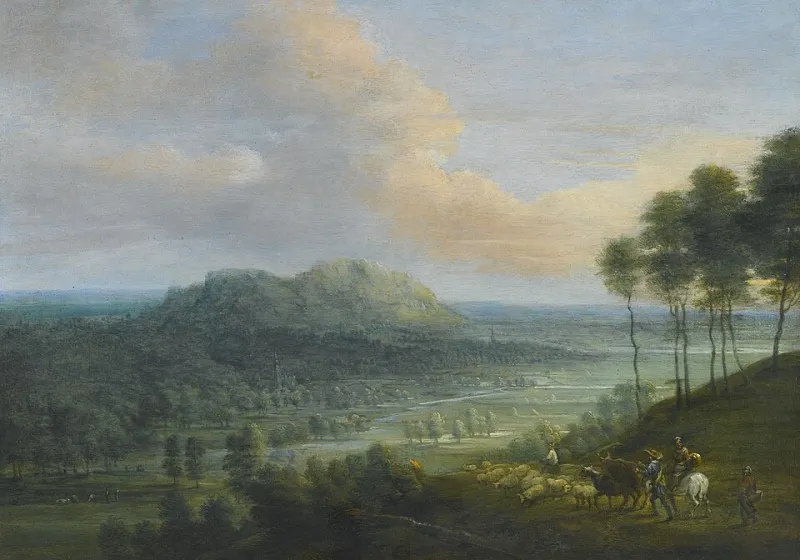
Photo: Lucas van Uden, Public domain, via Wikimedia Commons
Imagine visiting the same small Japanese town twice and feeling like you've been to two completely different places. Now imagine doing that four times — once in each season — and having four experiences so distinct that you'd struggle to convince someone they all happened in the same ZIP code.
That's the reality of rural Japan. Unlike Tokyo, which hums along at roughly the same pitch year-round, Japan's smaller towns are deeply, almost stubbornly seasonal. Their festivals, foods, rituals, and landscapes don't just change with the weather — they're rebuilt from scratch each season, rooted in agricultural rhythms and folk traditions that go back centuries. For American travelers willing to plan around that calendar, the payoff is extraordinary.
Here's your season-by-season breakdown of what to look for, where to go, and what it all means.
Spring: The Season of Beginnings (March–May)
What's happening: Rice paddy preparation, cherry blossom festivals, and the reopening of mountain roads after winter closure.
Everyone knows about cherry blossoms. What fewer people know is that the most meaningful spring rituals in rural Japan happen after the petals fall — when the real work of the agricultural year begins.
In towns like Nishimonai in Akita Prefecture and the farming villages of the Noto Peninsula in Ishikawa, spring means ta-ue — the planting of rice seedlings, often accompanied by ancient songs and ceremonies meant to bless the fields. These aren't performances for tourists. They're working rituals that farming families have repeated for generations. If you happen to be there, you may be invited to help. Say yes.
Best experience: In the Noto Peninsula, look for towns that still practice dengaku — a form of ritual music performed at rice-planting time. It's hypnotic, a little otherworldly, and about as far from a Tokyo nightclub as you can get while still being on planet Earth.
Practical tip: Spring in the mountains means unpredictable weather. Pack layers. The gap between a sunny afternoon and a cold, misty evening can be dramatic.
Summer: Ancestors, Fireworks, and Sweat (June–August)
What's happening: Obon, summer matsuri, firefly season, and the full awakening of mountain and coastal towns.
Summer in rural Japan is loud, warm, and spiritually charged in a way that can catch American visitors off guard. The centerpiece is Obon — a Buddhist tradition, usually observed in mid-August, during which the spirits of ancestors are believed to return to the living world for a brief visit. Families clean graves, light lanterns, and perform bon odori — circular folk dances that vary in style from region to region.
Head to Tokushima for the famous Awa Odori, Japan's most exuberant Obon dance festival, where the streets fill with thousands of dancers and the philosophy is basically: if you're not dancing, you're watching wrong. Or seek out smaller, quieter Obon observances in mountain villages in Nagano or Yamagata, where the lanterns floating down a river at dusk will stay with you longer than any fireworks show.
Summer is also peak season for firefly viewing (hotaru kansho), a deeply beloved tradition in rural Japan. Towns along clean mountain streams in Gifu and Mie prefectures organize gentle evening walks along the water's edge. No admission fee. No crowd control ropes. Just fireflies.
Best experience: Find an Obon dance in a small town where the performers are townspeople, not professionals. The joy is unfiltered and completely contagious.
Practical tip: August is hot and humid across most of Japan. Rural towns often offer relief in the form of altitude or ocean breezes, but plan your midday activities accordingly.
Autumn: The Harvest and the Sacred Mountain (September–November)
What's happening: Rice harvest, autumn leaf viewing, harvest festivals, and the most spectacular scenery in Japan.
Autumn foliage in Japan is genuinely competitive with New England — and in rural areas, you experience it without the traffic jams. The mountains of Nikko in Tochigi, the forests around Shirakawa-go in Gifu, and the valleys of Yamadera in Yamagata turn colors so vivid they look like someone adjusted the saturation slider on reality.
But autumn's real soul is in the harvest. Towns that spent spring planting and summer tending now celebrate the rice coming in. Local festivals — often featuring mikoshi (portable shrines), traditional music, and enough grilled food to constitute a full county fair — mark the end of the agricultural year with genuine gratitude. This isn't a reenactment. It's a community saying thank you to the land.
Shirakawa-go is worth singling out: a UNESCO World Heritage village of steep-roofed gassho-zukuri farmhouses that looks, in autumn, like it was painted by someone who'd never heard the word "restraint." Visit on a weekday to avoid the weekend crowds.
Best experience: Attend a local niiname-sai — a harvest thanksgiving ritual — if one coincides with your visit. The ceremony is simple and quiet, which makes it more moving, not less.
Practical tip: Peak foliage in rural mountain towns often runs two to three weeks ahead of city schedules. Check regional forecasts, not national ones.
Winter: Snow, Fire, and the Stillness Between Worlds (December–February)
What's happening: Snow festivals, winter illuminations, hot spring season, and the kind of quiet that restores something in you.
Winter is when rural Japan empties out and becomes, paradoxically, most itself. The tourists are gone. The pace drops. And the snow — particularly in regions like Tohoku, Niigata, and Hokkaido — transforms ordinary landscapes into something that feels genuinely mythological.
The Yokote Kamakura Festival in Akita Prefecture involves building dozens of igloo-like snow domes (kamakura) throughout the town, each one lit from within by a small altar and candles. Children sit inside them, offering amazake (sweet rice wine) to passersby. It's one of the most quietly magical things you can witness in Japan.
Winter is also the season for onsen — Japan's hot spring baths — to reach their full potential. Sitting in an outdoor rotenburo while snow falls around you, in a town where you might be the only foreigner, is an experience that resists description but demands to be had.
Best experience: Book a night at a small ryokan near an active snow festival. The combination of a traditional inn dinner, a hot bath, and stepping outside into a lantern-lit snow village is the kind of thing people come back from changed.
Practical tip: Winter travel in rural Japan requires flexibility. Train schedules can be disrupted by heavy snow. Build buffer days into your itinerary, and treat any delays as an invitation to stay longer.
The Bigger Point
Rural Japan doesn't have an off-season. It has four completely different personalities, each one worth showing up for. The mistake most travelers make is treating these towns as backdrop — places to photograph on the way to somewhere else.
Go slow. Go more than once. Let the season tell you what to do. That's the furusato way.