Meet the Makers Keeping Rural Japan Alive, One Craft at a Time
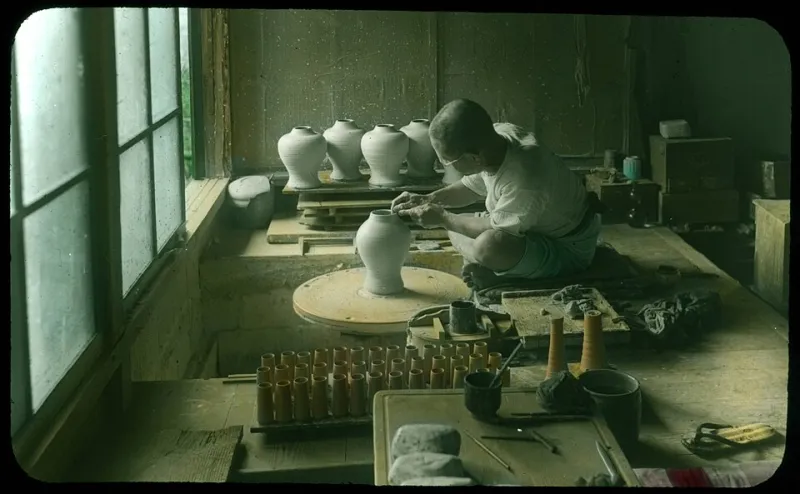
Photo: University of Victoria Libraries from Victoria, Canada, No restrictions, via Wikimedia Commons
Let's be honest about something: a lot of "authentic cultural experiences" in travel are neither particularly authentic nor especially cultural. You show up, you watch a brief demonstration, you buy something from a gift shop, and you leave feeling like you checked a box. Japan has plenty of that version, especially in its bigger tourist cities.
But spend a morning in a workshop in rural Gifu Prefecture, watching a lacquerware artisan apply a coat that will need six months to cure properly, or sit across from a textile weaver in a depopulating Tohoku village who learned her craft from her grandmother and is now teaching it to anyone willing to come learn — and you start to understand that something genuinely different is available if you know where to look.
Craft tourism in Japan's shrinking countryside isn't a niche hobby for particularly dedicated travelers. It's becoming one of the more compelling arguments for why rural Japan deserves your attention, your time, and yes, your money.
The Stakes Are Real
Japan's population decline hits rural areas hardest. Towns that once had thriving local economies built around agriculture, fishing, and traditional industries have watched their young people leave for cities over the past few decades. In some villages, the average age of residents is now in the sixties. Schools have closed. Shops have shuttered.
Traditional crafts sit right at the intersection of this crisis. Many techniques — specific dyeing methods, particular pottery glazes, regional weaving patterns — exist in the hands of only a handful of aging practitioners. When those people retire or pass away without having trained successors, the knowledge doesn't just become rare. It disappears entirely.
What's shifted in recent years is that some of these artisans have started seeing tourism not as a distraction from their work but as part of the work itself. Opening workshops to visitors, offering hands-on experiences, creating a direct economic relationship between travelers and makers — it's a survival strategy, and in a growing number of cases, it's working.
Mashiko, Tochigi — Pottery That Built a Town's Identity
About two hours north of Tokyo, the town of Mashiko has been synonymous with folk pottery since the mid-20th century, when the legendary ceramicist Shoji Hamada settled there and helped establish it as a center for mingei — the Japanese folk craft movement. Today, hundreds of kilns and studios operate in and around the town.
For visitors, Mashiko is an excellent first stop on any craft-focused Japan itinerary because it's genuinely accessible and the infrastructure for tourism is solid. The twice-yearly Mashiko Pottery Fair draws serious collectors, but the real experience is in the smaller workshops between events. Many potters welcome visitors, offer throwing classes, and sell directly from their studios at prices that reflect the actual economics of handmade work rather than tourist markup.
The Hamada Sankokan museum, dedicated to Shoji Hamada's life and work, provides excellent context for understanding why Mashiko pottery looks the way it does — and why that matters to the town's identity.
Nishiwaki, Hyogo — Banshu Ori Textiles and a Town Betting on Its Looms
Banshu ori is a type of pre-dyed yarn weaving that's been produced in the Nishiwaki area of Hyogo Prefecture for over two centuries. At its postwar peak, the region had thousands of looms running. That number has dropped dramatically, but the craftspeople who remain are doing something interesting — they're turning their workshops into destinations.
Several Banshu ori producers now offer factory and studio tours that go well beyond the standard demonstration format. You can sit with a weaver, understand the specific logic of pre-dyeing versus post-dyeing, and see how traditional patterns are being reinterpreted for contemporary markets. The textiles themselves — scarves, fabric by the yard, small goods — are genuinely beautiful and priced fairly for the labor involved.
Nishiwaki isn't on most international itineraries, which is part of what makes it worth going to. You're not sharing the experience with a tour bus.
Wajima, Ishikawa — Lacquerware at the Edge of the Sea
Wajima lacquerware is one of Japan's most celebrated traditional crafts, and the city of Wajima on the Noto Peninsula has been producing it for at least a thousand years. The technique is extraordinarily labor-intensive — a single piece might require dozens of individual steps over months or years — and the resulting objects have a depth and warmth that photographs don't fully capture.
The 2024 Noto Peninsula earthquake caused significant damage to the region, and Wajima was among the hardest-hit areas. Rebuilding is ongoing, and some workshops that previously welcomed visitors are still recovering. But this context matters for travelers thinking about craft tourism: visiting Wajima now, buying directly from artisans, and being part of the economic recovery is exactly the kind of meaningful travel this site exists to encourage. Check current conditions before you go, but don't write the region off — the craftspeople there need visitors more than ever.
How to Actually Do This Well
Craft tourism done thoughtlessly can be extractive — you show up, take photos, buy the cheapest item available, and leave. Done well, it's genuinely reciprocal. Here's how to tip toward the latter.
Book directly when you can. Many rural workshops have websites or can be reached through local tourism boards. Cutting out intermediaries means more money reaches the maker.
Take the class or workshop option. Even a 90-minute pottery experience or a short weaving session changes your relationship to the object you take home. You understand what went into it. That understanding is worth paying for.
Buy something real. A handmade item from a struggling rural workshop isn't a souvenir — it's a small piece of someone's life work. Budget accordingly. The $200 hand-thrown Mashiko bowl will outlast every piece of mass-produced homeware you own.
Ask questions. Japanese artisans are often remarkably generous with their knowledge if you're genuinely curious. A translation app helps, but enthusiasm crosses language barriers pretty effectively.
Stay in the town. If you're visiting a craft workshop, stay overnight in the area rather than day-tripping from a city. Rural guesthouses and minshuku (family-run inns) are another piece of the local economy that needs support.
The Bigger Picture
There's a version of Japan travel that's essentially a greatest-hits tour — the famous temples, the famous food streets, the famous mountain with the lake in front of it. That trip is lovely. Nobody's saying don't do it.
But the craftspeople working in Japan's depopulating countryside are doing something that's both historically significant and personally compelling. They're choosing to stay. They're choosing to keep techniques alive that the market alone wouldn't sustain. They're betting that what their communities know how to make still matters.
When you visit, you're not just a tourist. You're part of the argument they're making that it does.