From Farm to Fork to Flight: Why American Chefs Are Heading Deep into Rural Japan to Dig Up Dying Recipes
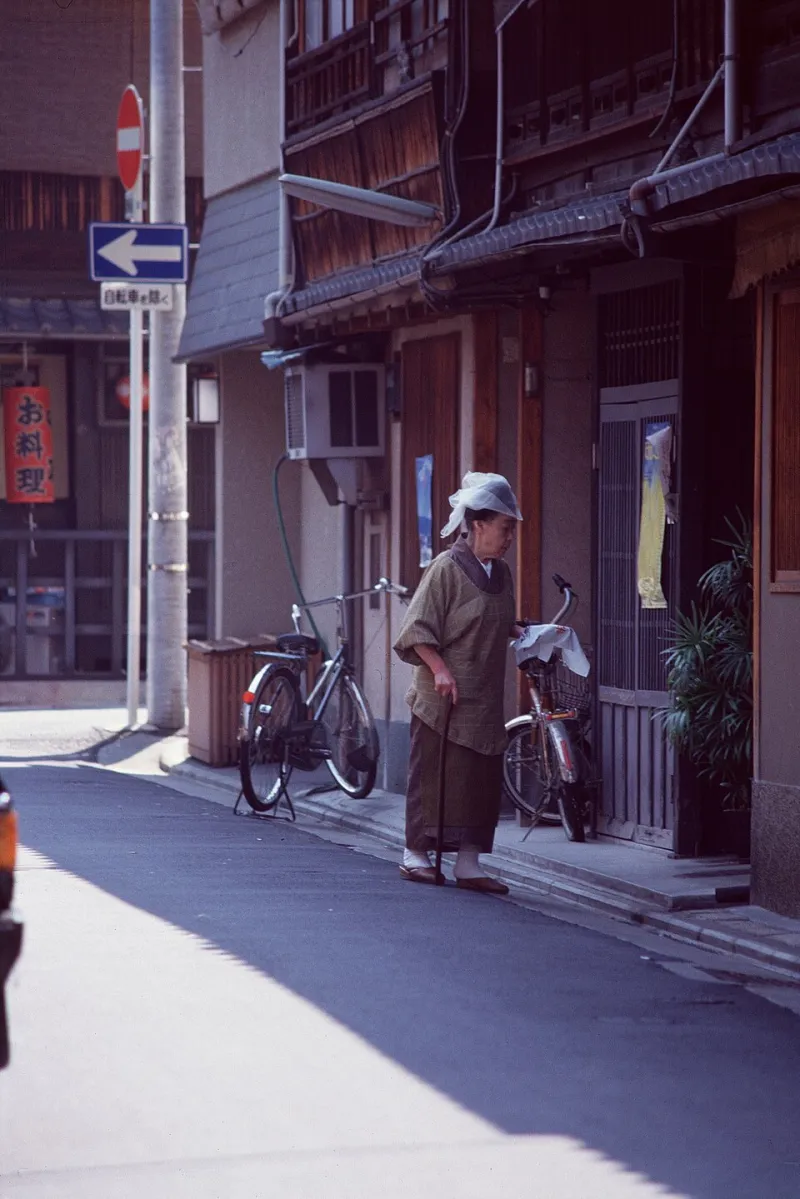
Photo: Marie-Sophie Mejan, CC BY 4.0, via Wikimedia Commons
There's a particular kind of miso that an 82-year-old woman named Fumiko makes in a village outside Murakami, in Niigata Prefecture. She's been making it the same way for sixty years — aged in cedar barrels her late husband built, seasoned with salt from a supplier who retired a decade ago, fermented through winters that the rest of Japan has mostly forgotten how to sit still through. She has no apprentice. She has no Instagram. And until a chef from Portland, Oregon showed up at her door three years ago, she had no idea that anyone outside her neighborhood cared.
That Portland chef — who asked to be identified only by his first name, Derek — had read a passing reference to Murakami's regional miso traditions in a Japanese food anthropology paper. He booked a flight, took three trains and a bus, and knocked on a door he wasn't entirely sure was the right one. "She thought I was lost," he laughs. "Which, honestly, fair."
Derek isn't an anomaly anymore. Across Japan's rural prefectures, a slow but steady stream of American culinary professionals and serious food enthusiasts is making its way off the tourist trail and into the kitchens, fields, and fermentation cellars of furusato — the Japanese concept of hometown, of the place where your roots go deep. And what they're finding there is quietly reshaping what ends up on restaurant menus from Brooklyn to Bozeman.
The Ingredients Nobody Talks About
Japanese cuisine has had a long moment in the American spotlight. Ramen shops, omakase counters, and izakaya-style bars have become fixtures in most mid-sized American cities. But the food that's drawing chefs to the countryside isn't the polished, export-ready version of Japanese cooking. It's something older and stranger and harder to categorize.
Think of heirloom rice varieties grown only in a single valley, their flavor profiles shaped by specific mineral content in local water. Or kabu turnips cultivated in Kyoto's northern hills that taste nothing like the ones you'd find at a Whole Foods. Or the fermented fish pastes of Akita, or the wild mountain vegetables — sansai — that elderly foragers in Nagano have been harvesting from the same hillsides for generations.
These ingredients exist in a precarious space. They're not endangered in a dramatic, headline-grabbing way. They're just... quietly disappearing, as the people who grew and made and foraged them age out of the picture without anyone to pass the knowledge on to.
Chef Mara Okonkwo, who runs a small tasting-menu restaurant in Chicago focused on fermentation, spent six weeks last spring traveling between Ishikawa and Fukui prefectures on what she describes as a "listening tour." "I wasn't there to learn a recipe I could replicate exactly," she says. "I was there to understand a philosophy. The way these communities think about patience, about using what the land gives you, about nothing going to waste — that's the thing I was trying to absorb."
What she brought back wasn't a dish. It was a sensibility. Her current menu features a fermented vegetable course built around techniques she adapted from watching a farmhouse kitchen in rural Fukui, using locally sourced Midwestern produce. "It's not Japanese food," she's careful to say. "It's American food that learned something from Japan."
The Economic Equation Nobody Expected
Here's the part of this story that surprises most people: the chefs aren't just taking. In community after community, their visits are creating small but meaningful economic ripples that local governments and regional tourism boards are starting to pay attention to.
When Derek returned to Murakami — twice more in the following two years, once with two colleagues — Fumiko's miso became a minor local talking point. A regional food writer heard about the American visitors and ran a short piece. A Niigata-based specialty food importer reached out. Fumiko, who had been quietly planning to let the tradition end with her retirement, found herself instead training her granddaughter with renewed purpose.
"I don't want to overstate it," Derek says carefully. "One chef visiting didn't save anything. But it started a conversation. It made people in that town look at what they had differently."
This pattern — outside attention catalyzing local reassessment — is showing up in multiple regions. In parts of Yamagata, local agricultural cooperatives have begun packaging heirloom grain varieties specifically because visiting food professionals expressed interest. In Tokushima, a small yuzu farming family started offering informal stays and kitchen sessions after an American food blogger's post went modestly viral in culinary circles.
Japan's rural depopulation crisis is real and ongoing, and no amount of culinary tourism is going to reverse it on its own. But prefectural tourism offices are beginning to recognize that food-focused visitors — who tend to stay longer, spend more locally, and return repeatedly — represent a different kind of traveler than the standard tourist.
What to Know If You Want to Go
If this sounds like the kind of trip you want to take, a few practical realities are worth knowing upfront. This is not a packaged experience. There are no "forgotten recipe tours" with a booking button and a five-star rating on TripAdvisor. The most meaningful visits tend to happen through connections — a mutual introduction, a local guide who knows the region deeply, or patient outreach through regional tourism associations.
Organizations like the Japan National Tourism Organization (JNTO) have offices in the US and can sometimes facilitate introductions to regional programs. Some prefectures — Ishikawa, Yamagata, and Nagano among them — have invested in rural cultural exchange infrastructure that can connect serious visitors with local producers and culinary practitioners.
Language is a real barrier in rural areas, and hiring a local interpreter who has food or agricultural knowledge is worth the investment. Several Japan-based travel consultants now specialize in exactly this kind of itinerary.
And go with humility. The chefs who come back with something real are, without exception, the ones who showed up to listen rather than to extract. Fumiko didn't teach Derek her miso recipe. But she let him sit in her kitchen for four days, and that turned out to be worth more.
The Bigger Picture
There's something quietly beautiful about the exchange happening here. Japan's furusato regions have long struggled with a sense that what they offer isn't valued — that young people leave for cities, that traditions fade, that the countryside is a place people are from rather than a place people choose. When American chefs make a transatlantic journey specifically to sit in a farmhouse kitchen and learn something that exists nowhere else on earth, it sends a different message.
It says: this matters. What you know matters. The flavor of that miso, the way you fold that dough, the name of that mountain vegetable — it matters to someone, even someone who had to fly fourteen hours to get here.
That might be the most important ingredient of all.