Where the Spirits Still Live: Japan's Small-Town Museums Are Keeping Folk Legends Breathing
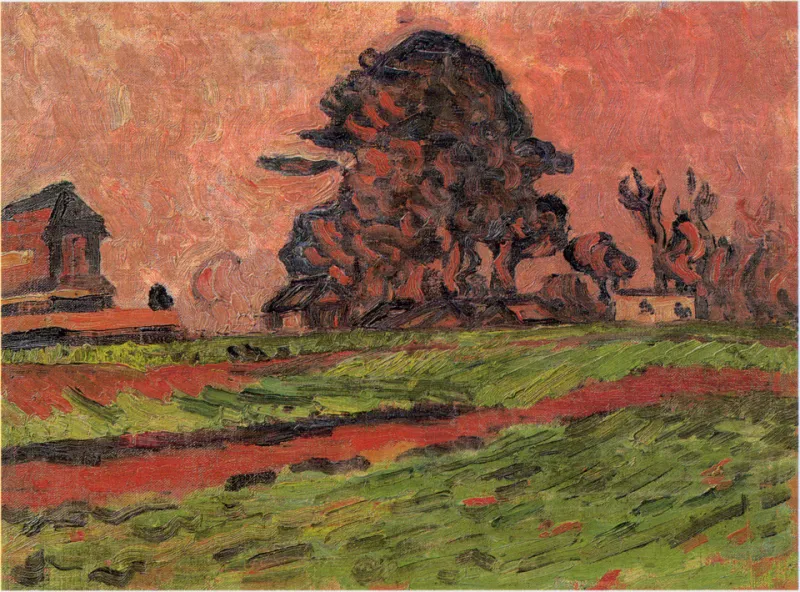
Photo: Tetsugorō Yorozu, Public domain, via Wikimedia Commons
Most travelers land in Japan with a checklist that looks pretty familiar — Kyoto temples, Tokyo neighborhoods, maybe a bullet train through the countryside with their nose pressed against the window. And look, that's a great trip. But somewhere between the Shinkansen stops and the souvenir shops, something extraordinary is happening in the small towns that most visitors never slow down for.
Across rural Japan, local governments, community groups, and passionate scholars are quietly building — and in some cases rescuing — museums dedicated entirely to the folk spirits, supernatural creatures, and regional deities that once defined how ordinary people understood the world around them. Yokai. Kami. Tengu. Kappa. These aren't just anime characters or Halloween costumes. For centuries, they were the living explanation for strange sounds in the forest, illness that couldn't be explained, and the particular personality of a mountain or river.
And right now, small-town Japan is fighting to make sure that story doesn't disappear.
Why Folklore Museums Exist in the First Place
Here's something that might surprise you: Japan has been worried about losing its regional folk traditions for decades. As younger generations moved to cities starting in the postwar era, the oral traditions, local rituals, and community knowledge that kept these stories alive started fraying. An elderly farmer who knew exactly which kami lived near the old oak at the edge of the rice paddies — when he passed, that knowledge often went with him.
Municipal museums stepped into that gap, but not always in the most inspiring ways. Early efforts sometimes felt more like archives than experiences. What's changed in recent years is the storytelling. Smaller regional heritage centers, many of them funded partly through community initiatives and local tourism boards, have started treating folklore not as a relic to be preserved under glass but as a living identity worth celebrating.
The result is a museum culture that feels genuinely different from anything you'd find in a major city.
The Mizuki Shigeru Museum, Sakaiminato — The Gateway Drug
If you're new to this world, Sakaiminato in Tottori Prefecture is the place to start. The Mizuki Shigeru Museum is dedicated to the legendary manga artist who grew up there and spent his career documenting Japan's yokai traditions with obsessive, affectionate detail. Walking through Sakaiminato is itself an experience — the entire town has leaned into its yokai identity, with bronze statues of creatures lining the main shopping street.
But the museum itself is where things get interesting. It doesn't just celebrate Mizuki's art; it contextualizes it against real regional folklore, explaining which creatures came from which parts of Japan and what they meant to the communities that created them. For American visitors, it's a genuinely accessible entry point — the visual storytelling is rich enough that language barriers matter less than you'd expect.
Tono, Iwate — Where the Stories Feel Uncomfortably Real
If Sakaiminato is the friendly introduction, Tono is the deeper cut. This small city in Iwate Prefecture is considered the spiritual home of Japanese folklore studies, largely because of a 1910 book called The Legends of Tono by Kunio Yanagita, who documented the region's supernatural tales at a time when industrialization was threatening to erase them.
The Tono Municipal Museum and the surrounding Furusato Village — an open-air heritage site — do something quietly powerful. They present folklore not as superstition but as a sophisticated way of understanding a specific landscape and the people who lived in it. The kappa legends tied to Tono's rivers, the zashiki warashi (household spirits) associated with old farmhouses — visiting here, you start to understand that these stories were doing real cultural work.
Tono also benefits from its geography. The town is surrounded by the kind of misty, forested valleys that make you understand exactly why people believed extraordinary things happened here. The landscape earns the legends.
Shimane's Hidden Heritage Centers — The Under-the-Radar Circuit
Shimane Prefecture doesn't get nearly enough attention from international visitors, which is genuinely baffling given that it's home to Izumo Taisha, one of Japan's oldest and most important shrines, and an entire regional culture built around the idea that the gods gather there every October.
Beyond the main shrine complex, smaller community museums scattered through the Shimane countryside document local kami traditions with a specificity that larger institutions can't match. These are places where a single village's relationship with a particular mountain deity might get an entire room. The scale feels human. The stories feel like they belong to real people rather than to textbooks.
For visitors willing to rent a car and do a little exploring, this part of western Japan offers a folklore experience that's genuinely hard to replicate anywhere else.
What Makes These Places Different from City Museums
Here's the honest comparison: Japan's major national museums are extraordinary. The Tokyo National Museum, the Kyoto National Museum — they hold irreplaceable objects and do important work. But they operate at a level of abstraction that can feel distant. You're looking at artifacts from a civilization.
Regional folklore museums operate at a completely different register. You're looking at the beliefs of a specific valley, a specific fishing village, a specific mountain community. The kami documented in a small Shimane heritage center isn't a symbol of Japanese religion in general — it's the particular spirit that the people of this place believed watched over their rice harvest. That specificity is what makes these visits stick with you.
There's also something worth acknowledging about the communities themselves. Many of these towns are shrinking. Population decline is a genuine crisis across rural Japan. When you spend a day at a small regional museum, buy lunch at a local restaurant, and maybe pick up a book from the gift shop, you're participating in something that matters beyond tourism. You're part of the reason these places can keep their doors open.
Practical Notes for the Curious Traveler
Getting to most of these museums requires a bit more planning than a standard city itinerary. Trains reach Sakaiminato and Tono, but schedules can be infrequent. Shimane's smaller heritage sites really do benefit from having your own wheels.
Language accessibility varies widely. Sakaiminato and Tono have decent English signage. Smaller community museums may have very little. A translation app on your phone helps, but honestly, so does just being comfortable with not understanding everything — sometimes wandering through a space and absorbing the atmosphere is its own kind of experience.
Visit in autumn if you can. The combination of fall foliage and the particular atmosphere of Japanese folklore feels almost designed to go together. Though if you want the full supernatural experience, the period around Obon in mid-August — when the spirits of ancestors are believed to return — adds a layer of cultural context that makes everything feel more alive.
These museums aren't trying to compete with Kyoto. They're doing something else entirely — keeping specific, irreplaceable stories from vanishing into silence. That's worth a detour.