When the Bell Rings, Everyone Knows Where They Stand: Japan's Daily Rituals and the Belonging Americans Are Starving For
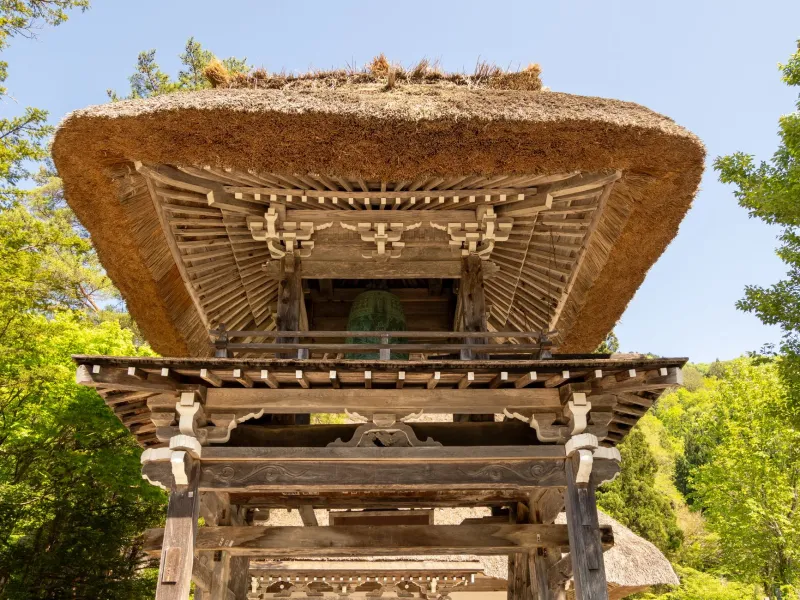
It's 6 a.m. somewhere in rural Hyogo Prefecture, and the valley is still dark at the edges. Then it happens — a low, resonant toll rolls out from the hillside temple and moves through the morning air like something physical. It doesn't ask permission. It doesn't check whether you're ready. It simply arrives, the same way it arrived yesterday, the same way it arrived fifty years ago, and the same way it will arrive tomorrow.
If you're an American visitor sleeping in a farmhouse guesthouse nearby, there's a decent chance that bell does something unexpected to you. Not just wakes you up. Something more than that. Something that takes a few days to name.
The Soundscape That Structures a Life
Japanese villages have always understood something that modern urban planning forgot somewhere along the way: sound can be a form of social contract. The temple bell at dawn isn't decorative. It's functional in the deepest sense — it tells everyone within earshot that the day has begun, that the community is still here, that time is moving and you're moving with it.
Beyond the bells, many rural communities still use a bōsai musen — a local emergency and announcement broadcast system — that doubles as a daily rhythm keeper. You'll hear it crackle to life mid-morning with reminders about community cleanup days, agricultural schedules, or simply the weather forecast delivered in a neighbor's voice. In some villages, it plays a short melody in the early evening, a soft signal that the workday is winding down and dinner should be on the table soon.
None of this is accidental. These are what anthropologists sometimes call "temporal anchors" — shared signals that synchronize a community's sense of time and mutual obligation. And in Japan's smaller towns, they've been refined over centuries.
Why Americans Feel It So Strongly
Here's what's interesting: American visitors consistently report being moved by these rituals in ways they don't entirely expect. Travel forums and guestbook entries at rural inns are full of comments that circle the same emotional territory. I didn't realize how unmoored I felt until I heard that bell every morning. Something about the evening chime made me feel like I was part of something, even as a stranger. I cried and I don't fully know why.
That reaction makes a lot of sense when you hold it up against the texture of contemporary American life. For most of us, the day begins with an alarm we set ourselves, moves through a schedule we individually negotiated, and ends when we personally decide it does. There's no shared signal. No collective acknowledgment that the day started, or that it's ending. We've optimized for individual autonomy so thoroughly that we've quietly dismantled the scaffolding that once made communities feel like communities.
Church bells used to do some of this work in American towns. So did factory whistles, school bells, and the 6 o'clock news. Most of those anchors are gone now, or have migrated into private earbuds. The result isn't freedom — or not only freedom. It's also a low-grade loneliness that's hard to diagnose because it has no obvious cause.
The Ritual Is the Relationship
In Japanese village culture, the shared ritual isn't just a nice backdrop to community life. It is community life, in a very practical sense. When everyone hears the same bell, everyone knows they're on the same clock. When the morning announcement reminds households about the communal road-clearing scheduled for Saturday, it's not just logistics — it's a weekly reminder that your effort is expected and your presence matters.
This concept, loosely related to the Japanese idea of kyōdōtai (communal body or collective), doesn't require that everyone be close friends. It just requires that everyone be oriented toward the same rhythm. The bell creates a kind of low-stakes intimacy — you don't have to know your neighbor's last name to know that they heard what you heard this morning.
For visitors, especially those spending several days or a week in a rural area, this starts to seep in. You begin to wait for the bells. You notice when the evening chime comes a few minutes late. You find yourself adjusting your own pace to match the rhythm around you, and somewhere in that adjustment, something loosens.
What Visitors Are Actually Looking For
People don't usually book a trip to rural Japan because they've read about communal broadcast systems. They book it because they want something authentic, something slower, something they can't quite name. But when you talk to them after the trip, the things that linger aren't always the scenic views or the local food — though those matter too. It's often the sounds. The bell. The crackle of the morning announcement. The way the whole valley seemed to exhale at the same moment each evening.
What they're describing, without always knowing it, is the relief of being held inside a shared rhythm. Of having the structure of the day handed to them by something outside themselves. Of feeling, briefly, like a member of something rather than an individual navigating everything alone.
That's not nostalgia, exactly. It's more like recognition — the sense that this is how humans were designed to live, and that somewhere along the way, many of us drifted very far from it.
Bringing Something Home
You can't pack a temple bell in your carry-on. But travelers who've spent time in Japan's rural communities often come back with a quiet intention to rebuild some version of this in their own lives. Some start small: a consistent morning routine that doesn't begin with a screen. A regular neighborhood walk at the same hour. A recurring dinner with the same small group of people, every week, without exception.
None of it replicates the depth of something built over centuries. But the impulse behind it is real, and it's worth taking seriously. The bell in that Hyogo valley isn't ringing for tourists. It's ringing because the village decided, long ago, that shared time is sacred — that marking the day together is a way of saying we are still here, and so are you.
That's a message worth waking up for. And for a lot of Americans who've made the trip out to Japan's quieter places, hearing it — even once, even as an outsider — is enough to change the way they think about what they're missing back home.