Nobody Asked If You Wanted to Show Up — You Just Do: The Unspoken Rules That Hold Rural Japan Together
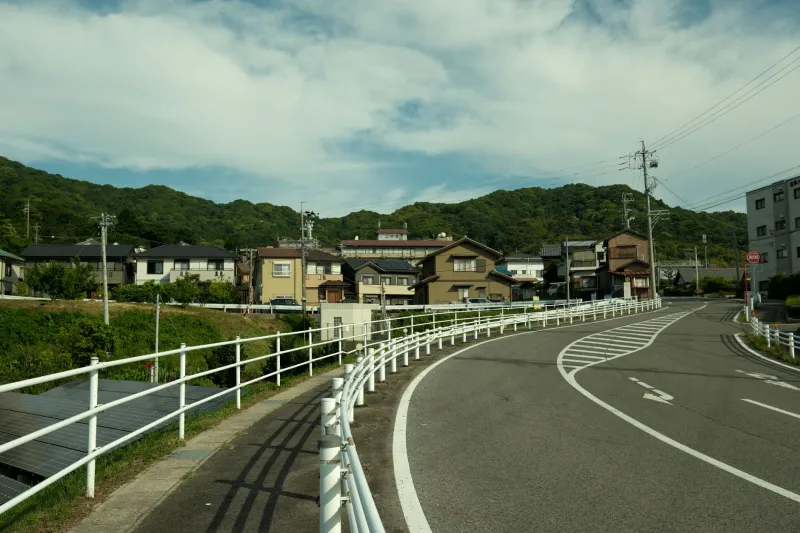
Dana Whitfield moved from Portland, Oregon to a small farming village in Hyogo Prefecture three years ago. She'd done her homework — she'd watched the YouTube videos, read the relocation blogs, even brushed up on her Japanese. What nobody told her was that on her third Saturday morning in town, a neighbor would appear at her door at 7 a.m. with a broom, a quiet nod, and the clear expectation that Dana would follow her outside to help sweep the road.
"I didn't know what was happening," she says, laughing now. "I just grabbed my shoes and went. Afterward I found out it was the monthly chonaikai cleanup — the neighborhood association's communal work morning. It happens every month. It's not optional. Nobody said that out loud, but everyone understood it."
That moment — confusing, slightly awkward, ultimately connective — captures something that a growing number of Americans are encountering when they spend real time in Japan's rural communities. These places run on a social operating system that has almost no equivalent back home, one built on implicit participation, collective responsibility, and a concept of belonging that doesn't wait for you to feel ready.
The Invisible Contract
In Japan, the chonaikai — the neighborhood or community association — is one of the most fundamental units of local life, especially outside major cities. It organizes everything from garbage collection schedules to disaster preparedness to seasonal festivals. Membership is technically voluntary. In practice, opting out carries a social weight that most residents simply don't choose to bear.
For Americans, this is where the culture shock tends to land hardest. The U.S. runs on a deeply individualistic social framework — you join a club because you want to, you volunteer because you feel like it, and your weekends are, fundamentally, yours. Rural Japan operates on almost the opposite assumption: your presence in the community is itself a kind of standing obligation. Your time, on certain days, belongs to the neighborhood before it belongs to you.
This isn't presented as a burden. It rarely comes with explicit instructions. It's simply the way things work, absorbed across generations through observation and participation, not written rules.
"I kept waiting for someone to give me a handbook," says Marcus Chen, a freelance designer from Austin who spent eight months in a small town in Nagano. "There was no handbook. You just watched what people did and tried to keep up. And if you didn't show up, you felt it — not because anyone said anything, but because you could tell."
Festivals Aren't Just Fun — They're Duty
If the monthly cleanup is the quiet baseline, the seasonal festival is the main event — and it carries its own set of unspoken expectations that go well beyond watching from the sidelines.
In many rural communities, local matsuri aren't just cultural spectacles. They're community infrastructure. The men who carry the mikoshi, the women who prepare the food stalls, the teenagers who practice the taiko drums for months in advance — these aren't volunteers who signed up out of enthusiasm. They're members of a community fulfilling roles that were, in many cases, handed down from their parents.
Americans who land in these towns during festival season often find themselves pulled into the preparation without quite knowing how it happened. Lisa Nakamura, who has family roots in Fukuoka but grew up in California, describes her first matsuri experience in her ancestral village as "equal parts overwhelming and deeply moving."
"They handed me a happi coat and pointed me toward a group of women folding paper decorations," she says. "I didn't speak enough Japanese to explain myself. I just sat down and started folding. Four hours later I felt more connected to that place than I had to my own neighborhood back home in fifteen years."
That's the paradox that keeps coming up in these conversations. The very thing that initially shocks Americans — the lack of choice, the assumed participation — turns out to be the mechanism that creates genuine belonging. You don't have to decide to be part of something. You already are. You just have to show up.
What It Feels Like When You Don't
It's worth being honest about the other side of this. The social contract that binds rural Japanese communities together can also feel suffocating, particularly for outsiders who aren't sure they want to be bound by it.
Missing a neighborhood cleanup without a good reason doesn't get you fined or formally reprimanded. But it registers. Neighbors notice. The easy warmth that comes with consistent participation can quietly cool. In a small town where everyone knows everyone, that chill carries real weight.
For Americans who grew up in a culture that treats personal time as sacred and community participation as purely elective, this can feel like pressure. Some people find it genuinely difficult to adjust. Others, after the initial friction, find it oddly liberating — a framework that removes the paralysis of endless choice and replaces it with the simple clarity of: this is what we do.
"Back home, I was always deciding whether to get involved in things," says Dana. "Should I go to the neighborhood meeting? Is this worth my Saturday? Here, that question kind of disappears. You go. And because you go, you know people. And because you know people, you're not lonely. It sounds simple, but it actually changed me."
Reading the Room Before You Enter It
If you're planning to spend meaningful time in a rural Japanese community — whether as a long-term resident, a volunteer, or even just a traveler staying with a local family — a few things are worth knowing before you arrive.
First, pay attention to timing. Community obligations tend to cluster around certain times of year — early spring cleanups, summer festival preparations, harvest-season gatherings. If you're in town during these windows, expect to be included.
Second, presence matters more than perfection. You don't need to know exactly what you're doing. Showing up, staying present, and following the lead of those around you communicates more than any amount of linguistic fluency.
Third, the chonaikai is your entry point. In most towns, introducing yourself to the neighborhood association — even informally — signals that you're taking your place in the community seriously. It opens doors that staying on the sidelines simply won't.
And finally, let go of the opt-in mindset. This is the hardest one for most Americans. The instinct to evaluate each request — do I want to do this? is this worth my time? — is deeply wired. In rural Japan, that instinct is worth setting aside, at least temporarily. What waits on the other side of just showing up is often something Americans have been quietly missing without quite knowing what to call it.
There's a Japanese phrase, machi ni ikiru — to live in the town, or more literally, to live with the town. It's a small grammatical difference that points to something enormous. Community here isn't a backdrop. It's a participant. And once you start showing up as one too, something shifts — in the town, and in you.