Words That Maps Can't Hold: How Japan's Vanishing Dialects Unlock the Soul of a Place
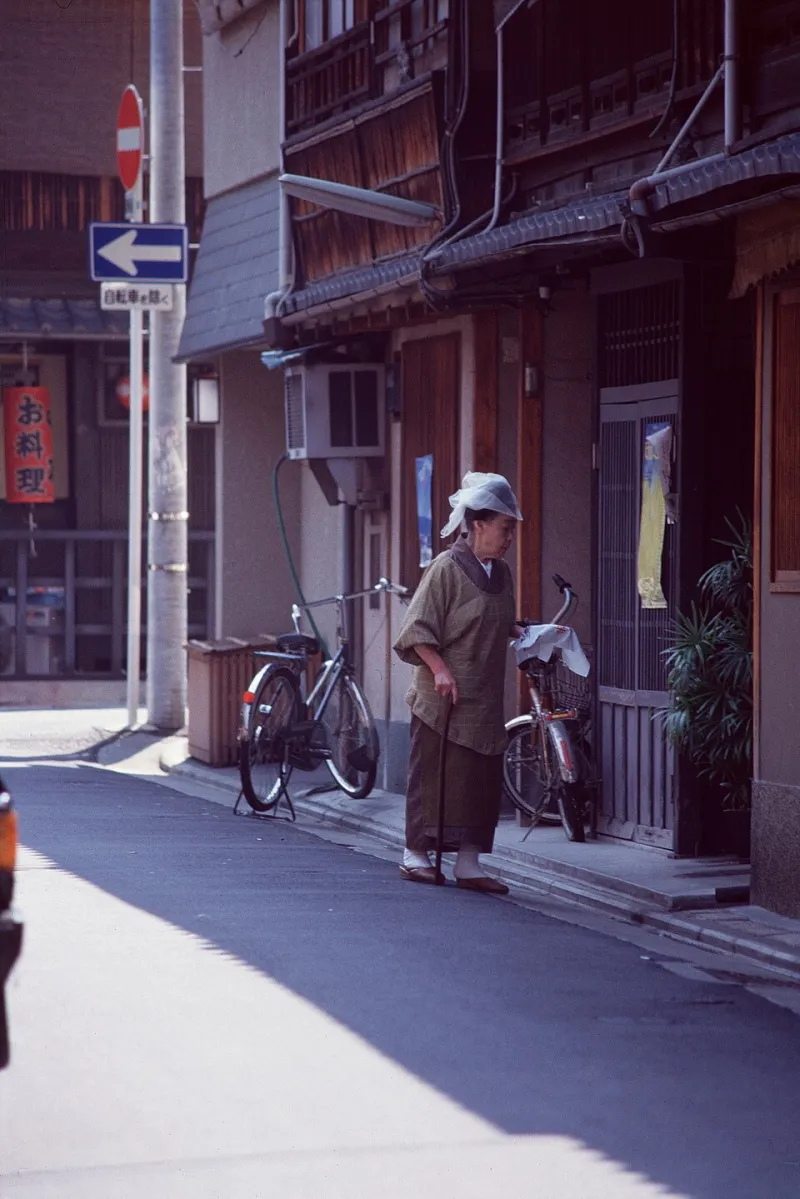
Photo: Marie-Sophie Mejan, CC BY 4.0, via Wikimedia Commons
You've done the prep work. You've got your phrasebook Japanese down — sumimasen, arigatou gozaimasu, the basics for ordering ramen and asking for directions. You land in Tokyo, and it all works perfectly. Then you take a train into the countryside, walk into a small izakaya in Kagoshima or a farmhouse guesthouse in Akita, and someone says something to you that sounds like Japanese but lands like a completely different language.
Welcome to hougen — Japan's regional dialects. And if you're the kind of traveler who wants to actually connect with a place rather than just pass through it, they might be the most important thing you've never thought to study.
More Than an Accent: What Dialects Actually Are
American travelers tend to think of regional speech variation in terms of accents — a Southern drawl, a Boston dropped r, a Midwestern flatness. Japan's dialects go considerably further than that. In some cases, the vocabulary, grammar, and pitch patterns diverge so dramatically from standard Japanese (known as hyojungo, or Tokyo-based standard speech) that mutual comprehension genuinely breaks down.
Kagoshima dialect, spoken on Kyushu's southern tip, was reportedly used as a field code during World War II precisely because even other Japanese speakers couldn't follow it. Tohoku dialects, clustered in Japan's northeastern region, carry vowel shifts and consonant blends that can leave even fluent Japanese speakers from other parts of the country scratching their heads. Kyoto's Kyo-kotoba carries centuries of aristocratic inflection that sounds almost theatrical to modern ears.
These aren't just curiosities. They're living archives. The words that survive in regional dialects often encode concepts, relationships, and ways of seeing the world that standard Japanese has no equivalent for — things that got smoothed away during Japan's modernization and linguistic standardization in the Meiji and postwar eras.
What's Being Lost — and Who's Trying to Stop It
The situation is genuinely urgent. Japan's rural depopulation isn't just emptying out towns — it's draining the human vessels that carry these speech patterns. When the last generation of fluent Tsugaru dialect speakers in Aomori passes on, something irreplaceable goes with them.
Linguists and cultural researchers across Japan are racing to document what they can. Universities in Kyushu, Tohoku, and the Ryukyu islands (home to the Okinawan languages, which are technically distinct from Japanese entirely) have active fieldwork programs. Community organizations in places like Yamagata and Shimane are creating dialect dictionaries, recording oral histories, and running workshops for younger residents who grew up speaking standard Japanese at school.
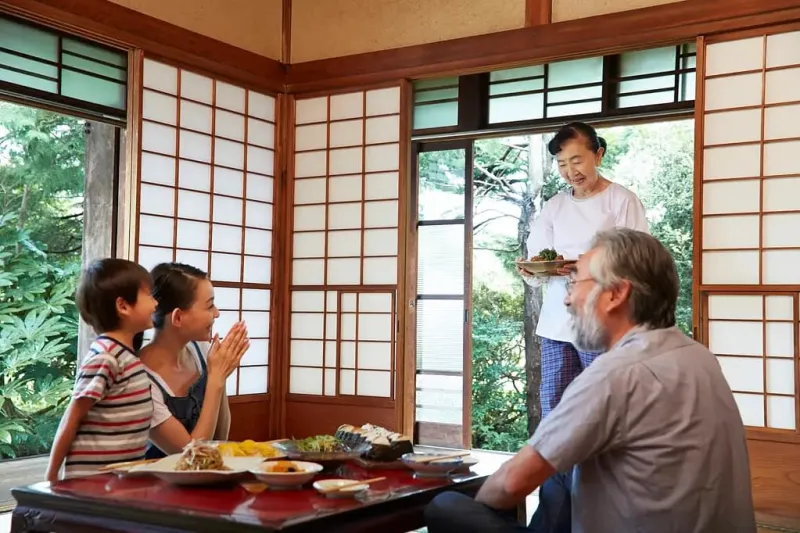
Some of these efforts have found unexpected allies in the tourism sector. A small but growing number of guesthouses and cultural programs are incorporating dialect into their visitor experiences — not as performance, but as a genuine invitation into local identity. In parts of Tohoku, hosts will teach guests a few phrases in the local variety of Japanese before meals, framing it not as entertainment but as a way of saying: this is how we actually talk here, and we want you to hear it.
Why a Few Local Words Change Everything
Here's a thing most travel guides won't tell you: in rural Japan, attempting even a handful of words in the local dialect does something that standard Japanese politeness, however well-executed, simply cannot. It signals that you didn't just Google "things to do in Yamagata." It signals that you care about the specific place you're standing in, not just Japan as a generic destination.
The reaction this tends to produce is hard to describe without sounding hyperbolic, but it's real. Elderly residents who might otherwise offer a polite, closed-off interaction will sometimes open up completely. A grandmother in an Akita farmhouse who seemed perfectly pleasant but guarded suddenly wants to know how you heard that word, who taught it to you, whether you want more tea.
You're no longer a tourist moving through. You're a person who made an effort, and in Japanese rural culture — where effort and sincerity are read closely — that matters enormously.
Practical Starting Points for the Curious Traveler
You don't need to become a dialectologist to make this work for you. Here's how to get started before and during your trip.
Research your destination's dialect family before you go. A quick search for "[region name] hougen" in English will usually surface academic articles, YouTube videos of native speakers, and sometimes even dedicated learning resources. The Kansai dialect (Kansai-ben), spoken in the Osaka-Kyoto-Kobe region, has a particularly rich online presence because of its association with Japanese comedy — it's a decent starting point for anyone new to dialect study.
Learn three to five phrases, not a whole curriculum. A greeting, a thank-you, maybe a term of affection or a local food word. That's enough. You're not trying to pass as a local — you're trying to show that you know this place has its own voice.
Ask your hosts directly. Most people who run small guesthouses or family-operated experiences in rural Japan are quietly proud of their local speech, even if they've spent years code-switching into standard Japanese for professional purposes. Ask them what words they use at home that they don't use at work. The conversation that follows is usually worth more than any guided tour.
Visit regions with active preservation efforts. Okinawa, Tohoku (particularly Aomori and Akita), Kyushu's southern prefectures, and the Izumo region of Shimane all have documented, community-supported dialect preservation work happening right now. In some of these places, you can attend workshops or events specifically designed to share local speech with interested outsiders.
The Deeper Thing You're Actually Learning
Language, at its most fundamental, is a map of what a community has noticed about the world — what it found important enough to name. When a Tohoku dialect has a specific word for the particular quality of light on snow in late winter, that's not just vocabulary. It's evidence of attention, of generations of people living closely enough with a landscape to name its moods.
That's what standard Japanese, for all its beauty and precision, can't always give you. And it's what frozen-in-amber heritage tourism rarely delivers either.
The dialects of rural Japan aren't footnotes to the main story. In many ways, they are the main story — the sound of a place knowing itself. And if you're willing to listen for them, they'll tell you more about where you are than any museum placard ever could.