Following the Family Name Back: How Americans Are Finding Themselves in Japan's Forgotten Countryside
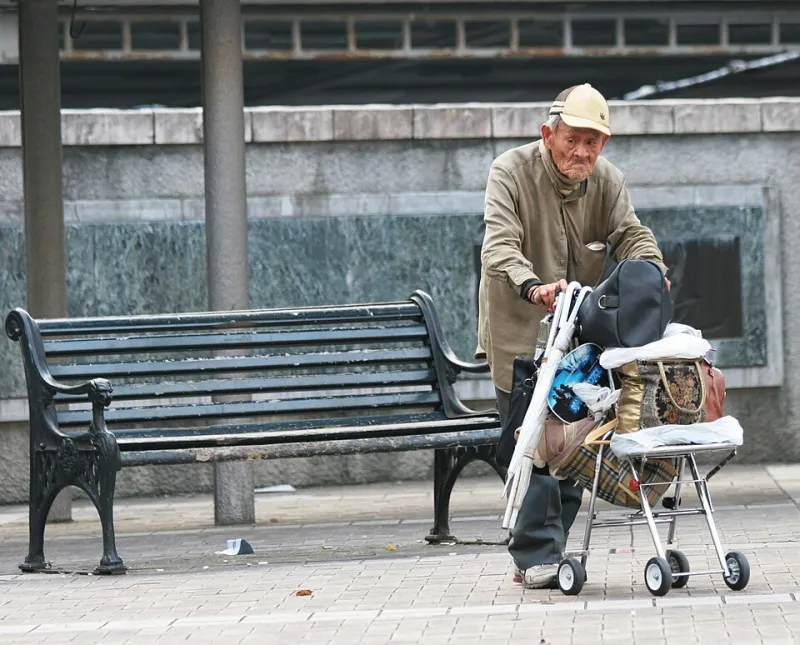
Photo: (Me) Thomas E. Smith, Public domain, via Wikimedia Commons
Lisa Tanaka grew up in Sacramento knowing almost nothing about her great-grandfather except his name and the single sepia photograph her grandmother kept on the kitchen shelf. He stood stiff and formal in front of a wooden gate, wearing a dark kimono, squinting slightly into the sun. Behind him, you could just make out the edge of a mountain.
For decades, that photograph was the entire record of where her family came from.
Then, two years ago, Lisa flew to Japan — not to Tokyo, not to Kyoto — but to a village of fewer than 800 people in Yamaguchi Prefecture that her grandmother had mentioned exactly once before she passed. She had a printout of her great-grandfather's family register, a phone loaded with translation apps, and absolutely no idea what she was walking into.
What she found there changed everything.
A Movement Hiding in Plain Sight
Across the United States, something quiet but significant has been building for years. Japanese American families — many of them third, fourth, or even fifth generation — are turning toward genealogy not just as a hobby, but as a kind of emotional reckoning. The disruptions of World War II, the shame and silence that followed incarceration, and the natural drift of assimilation all conspired to sever ties with Japan in ways that felt permanent at the time.
But they weren't permanent. Not entirely.
Genealogy platforms, digitized immigration records, and Japan's own koseki family register system — a remarkably detailed bureaucratic archive that traces family lineages back through generations — have made it increasingly possible for Americans to pinpoint not just which prefecture their ancestors came from, but which specific village, which street, sometimes even which house.
And once they know where to look, many of them are getting on planes.
What the Koseki Unlocks
Japan's koseki system is, in a word, extraordinary. Every Japanese citizen's birth, marriage, death, and family relationships are recorded in a register tied to a specific municipality — the honseki, or place of family origin. For Japanese emigrants who left in the late 1800s or early 1900s, their honseki often remained in the rural town their family had lived in for centuries.
For American descendants willing to navigate the paperwork — which typically requires proof of lineage and, sometimes, help from a Japanese genealogy service or local government office — the koseki can open doors that feel almost miraculous. Lisa, for instance, discovered through hers that her great-grandfather had a younger brother whose family never left Japan. That branch of the family had been farming the same land for four generations.
They were still there.
"I called the village office," she says, laughing a little at the memory. "My Japanese was terrible. But they were so kind. Someone helped me write a letter in Japanese, and about three weeks later, I got a response."
The response was from a man named Kenji — her great-grandfather's great-nephew, and by any reasonable definition, her cousin.
Arriving in Places That Weren't Waiting for You (But Were Glad You Came)
One of the most striking things about these reverse pilgrimages is how they tend to land in communities that have been slowly emptying out for decades. Rural Japan has been wrestling with depopulation for a long time — young people leave for cities, elderly residents age in place, and the social fabric of these towns frays year by year.
And then an American shows up at the village office holding a photograph from 1910.
For many of these communities, a visit from an overseas descendant carries a weight that's hard to describe. It's a reminder that the people who left weren't just gone — they carried the town with them, in their names, their habits, their cooking, their stories. And now, in some form, a piece of that has come back.
Marco Yoshida, a graphic designer from Portland whose maternal grandparents emigrated from Nagano Prefecture in the 1920s, describes arriving in the small town of Tōmi and being met by an elderly woman who recognized his grandmother's maiden name immediately.
"She grabbed my hand and started crying," he says. "I didn't understand most of what she said. But I didn't need to."
He spent four days there. The local historical society had documents. A temple had grave markers with his family's name. Someone's grandmother remembered stories about the family that had gone to America.
The Emotional Geography of Coming Home
These trips aren't always easy. For many Japanese Americans, the history of immigration is tangled up with hardship — the poverty that drove emigration, the trauma of wartime incarceration, the deliberate erasure of Japanese identity that some families undertook to survive. Arriving in the ancestral hometown can stir up grief alongside wonder.
Some visitors find relatives who knew nothing about the American branch of the family. Others discover that the family name they've carried their whole lives is written on a grave marker in a moss-covered cemetery at the edge of a rice field. A few have found living relatives who became, almost instantly, real family.
Lisa ended up staying in Kenji's home for a week. His wife cooked meals that tasted, inexplicably, like things Lisa had eaten at her grandmother's table. They communicated mostly through a translation app and a lot of laughter. On her last evening, Kenji drove her to the mountain behind the village — the same one, she's almost certain, that appeared blurred and distant in that old photograph on her grandmother's shelf.
"I stood there and I thought: he stood here," she says. "He was a real person, in a real place. And somehow, I made it back."
Practical Notes for Anyone Considering the Journey
If this kind of trip sounds like something you want to attempt, a few things are worth knowing before you go.
Start with what you have. Old photographs, immigration papers, naturalization certificates, and any documents that include Japanese characters can all contain clues. The honseki — the place of family registration — is often listed on early immigration records.
Consider a genealogy service. Organizations like the Japanese American Citizens League and various Japan-based genealogy researchers can help navigate the koseki application process. Some local municipal offices in Japan are also surprisingly helpful if you reach out directly.
Be patient with the timeline. The koseki request process can take weeks or months, and tracking down living relatives requires sensitivity and care. Don't expect to land in Japan and have answers within days.
And go in with an open heart. These towns weren't waiting for you — but many of them will be genuinely moved that you came. The furusato, the hometown, is a concept that runs deep in Japanese culture. The idea that someone would cross an ocean to find theirs resonates in ways that are hard to anticipate.
Lisa still keeps the old photograph on her own kitchen shelf now. But next to it, there's a new one: her and Kenji, standing in front of the same wooden gate, squinting slightly into the same mountain light.
The gate has been repainted. Everything else looks exactly the same.