When Showing Up Is the Job: Inside Rural Japan's Quiet Revolution in Elder Care
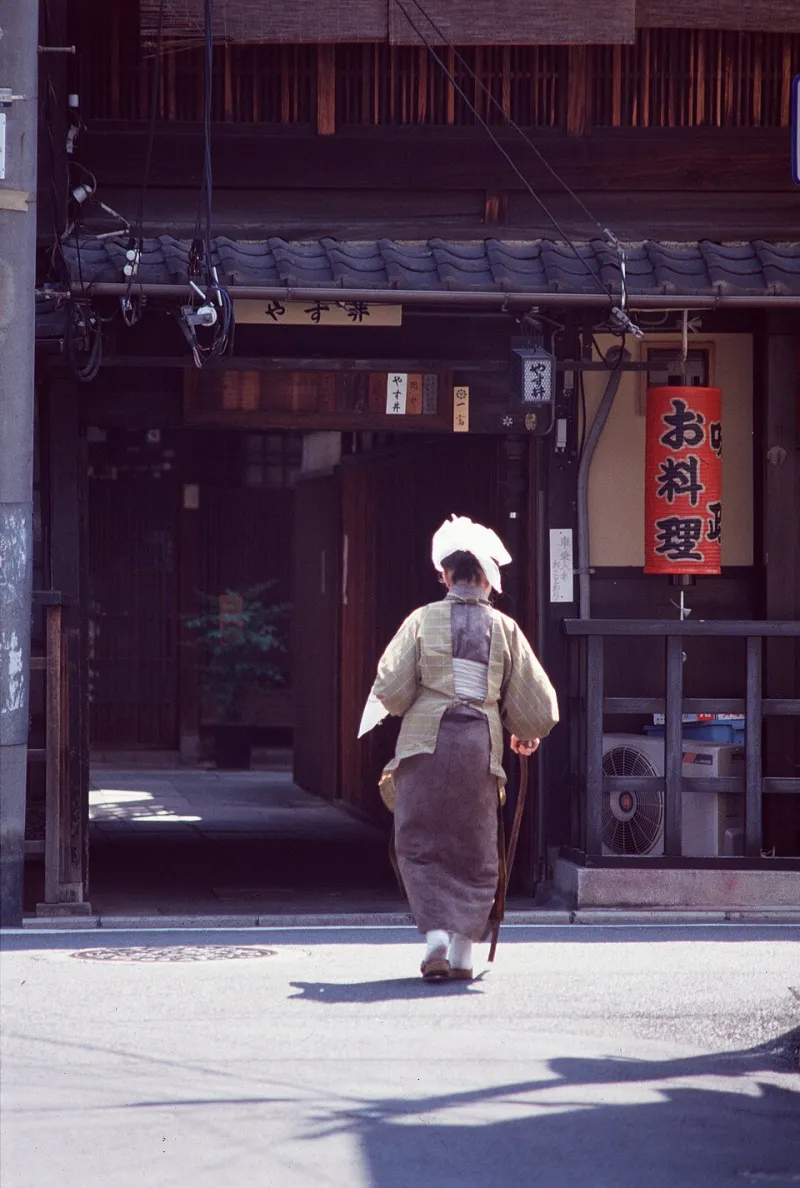
Photo: Marie-Sophie Mejan, CC BY 4.0, via Wikimedia Commons
There's a small office in a town in Hyogo Prefecture — population roughly 8,000 and falling — where the morning shift begins not with paperwork or patient charts, but with a thermos of green tea and a list of names. Each name belongs to an elderly resident who, sometime in the next few days, will receive a visitor. Not a nurse. Not a social worker. Just someone to talk to.
They call it mimamori in some places — literally, "watching over." In others, it goes by gentler names: companion services, social visit programs, conversation care. Whatever the label, the job description is essentially the same: show up, stay a while, and make another human being feel like they still matter to someone.
It sounds almost too simple to be a profession. But in Japan's countryside, where the population is aging faster than almost anywhere else on earth, it has become a quietly urgent one.
The Numbers Behind the Loneliness
Japan is often cited as a preview of what much of the developed world is heading toward — and nowhere is that more visible than in its rural regions. In some mountain villages and coastal towns, more than 40 percent of residents are over 65. Adult children have, for the most part, moved to Osaka, Tokyo, or Nagoya. Extended family networks that once made elder isolation nearly impossible have thinned to threads.
The result is a phenomenon Japanese researchers have been tracking for years: kodokushi, or "lonely death" — elderly people dying alone, sometimes undiscovered for days or weeks. It's a term that carries real weight in a culture where family obligation and communal belonging have historically been central values. The fact that it even has a name reflects how normalized the problem has become.
But beyond the dramatic endpoint of kodokushi lies something more everyday and arguably more pervasive: the slow erosion of simple human contact. Researchers studying rural aging in Japan have found that some elderly residents in remote areas go several days at a time without speaking to another person. Not because they're reclusive — but because there's simply no one around.
What a Professional Companion Actually Does
Tomoko, who works for a companionship service in a rural area of Shimane Prefecture, describes her job as "filling the gaps that family used to fill." On a typical day, she might spend an hour with a 78-year-old former rice farmer, listening to stories about harvest seasons from the 1970s. Later, she'll sit with an 84-year-old woman who wants to show her a photo album and explain who everyone in it is.
"People think it must be sad work," she says. "But mostly it's the opposite. These people have so much to say. They've just been waiting for someone to ask."
The services vary in structure. Some are municipally funded, embedded in local government wellness programs. Others are operated by nonprofits or small private companies. A few have emerged from Japan's chiiki okoshi kyōryōtai — regional revitalization programs that place workers in rural communities to address exactly these kinds of social gaps. Pricing, where it applies, tends to be subsidized to keep it accessible for residents on fixed pensions.
What companions don't do is equally important: they're not therapists, they don't provide medical care, and they're explicitly not substitutes for family. That last distinction matters culturally. There's still considerable ambivalence in Japan about the idea of paying someone to perform what was once considered a family duty. Some elderly residents initially resist the visits, viewing them as an admission of abandonment. Others come to treasure them.
A Mirror Held Up to Changing Values
For sociologists studying Japanese rural society, the rise of paid companionship services is less a solution than a symptom — and an illuminating one. It reflects the collision between a traditional social contract built on multigenerational households and the reality of a modern, mobile economy that has scattered families across the country.
In the postwar decades, the expectation was clear: children, particularly daughters-in-law, would care for aging parents and in-laws at home. That model didn't just provide physical care — it provided daily conversation, shared meals, the small rituals of being known by someone. As that system has frayed, the absence it leaves behind isn't just logistical. It's emotional and existential.
"What these services are really selling," one researcher framed it, "is continuity of personhood. The feeling that your life story is still being witnessed by someone."
That framing might sound philosophical, but it has practical stakes. Studies consistently show that social isolation in older adults is linked to cognitive decline, depression, and higher rates of hospitalization. Addressing loneliness isn't soft policy — it's preventive healthcare.
Sound Familiar?
Americans reading this might feel a flicker of recognition. The US isn't Japan — the demographics differ, the cultural context is distinct, and the policy landscape looks nothing alike. But rural America is navigating its own version of this story. In counties across Appalachia, the Great Plains, and the rural South, aging populations are increasingly isolated as younger generations migrate to cities and towns consolidate services.
Programs modeled loosely on Japanese companionship approaches have begun appearing in pockets of the US — volunteer visitor networks, senior connection programs, even some paid companion services funded through Medicaid waivers. They're scattered and underfunded, but they're there, responding to the same underlying need.
What Japan offers is not a blueprint — its solutions are deeply specific to its own culture, geography, and social infrastructure. But it does offer something useful: a slightly further look down a road that many American rural communities are just beginning to travel.
What Stays, What Changes
Back in Hyogo, the morning thermos is empty and Tomoko is heading out to her first visit of the day. The man she's going to see, a retired schoolteacher in his mid-eighties, has been asking her to help him record his memories of the town's old festivals — the ones that no longer happen, the ones that younger residents barely remember.
It's not in her job description, exactly. But she's been bringing a notebook.
"Someone should write it down," she says simply. "And he wants to tell it. So here we are."
There's something in that small exchange that feels very furusato — that untranslatable Japanese sense of hometown, of belonging to a place and a time that still matters even as it fades. Professional companionship in rural Japan isn't a perfect answer to a complicated problem. But in the space between one person's stories and another person's willingness to listen, something genuinely human is being preserved.
And maybe that's worth showing up for.