They Came for a Visit and Stayed for a Lifetime: Americans Who Put Down Roots in Japan's Shrinking Villages
Photo: The original uploader was Snow storm in Eastern Asia at English Wikipedia., CC BY 3.0, via Wikimedia Commons
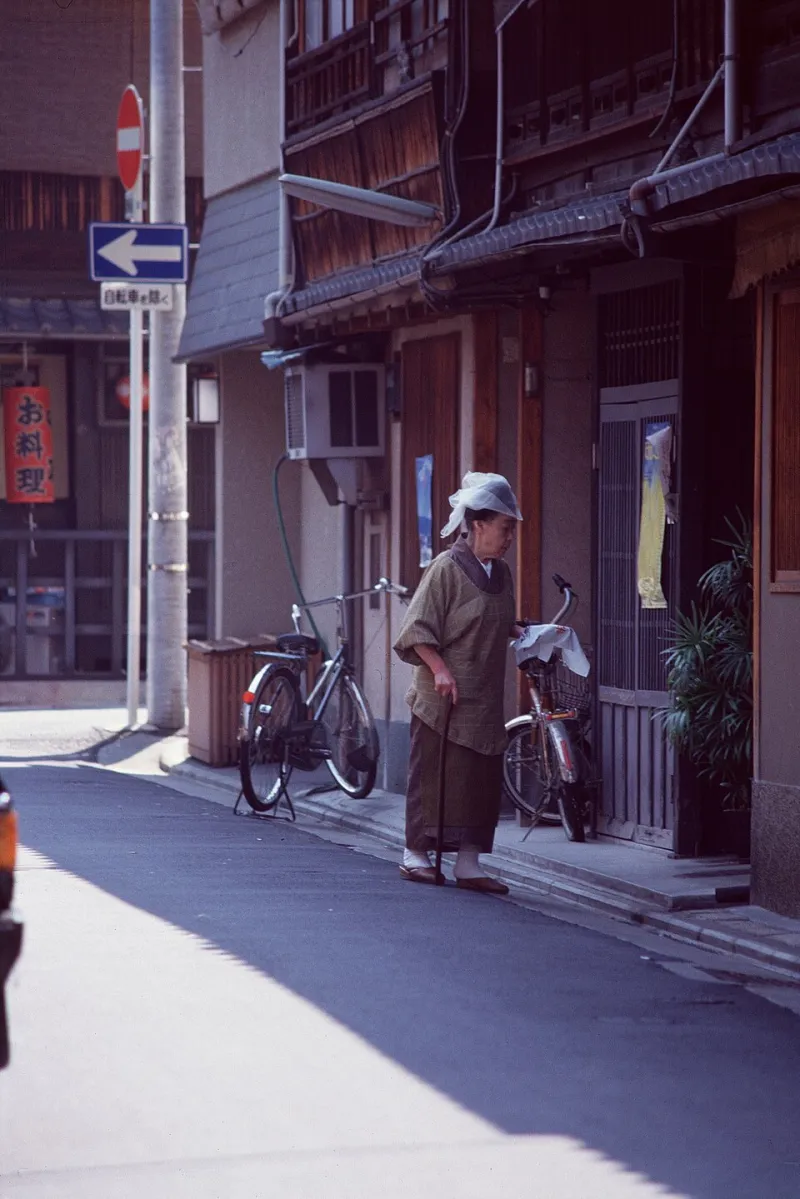
There's a word in Japanese — furusato — that doesn't translate cleanly into English. It means something like "hometown," but carries a weight that word can't quite hold. It's the place that shaped you, the smell of a particular season, the sound of a festival you heard as a kid. It's belonging, distilled.
For a small but growing number of Americans, furusato is no longer a place they were born into. It's a place they chose.
What Pulls Someone to a Depopulating Village?
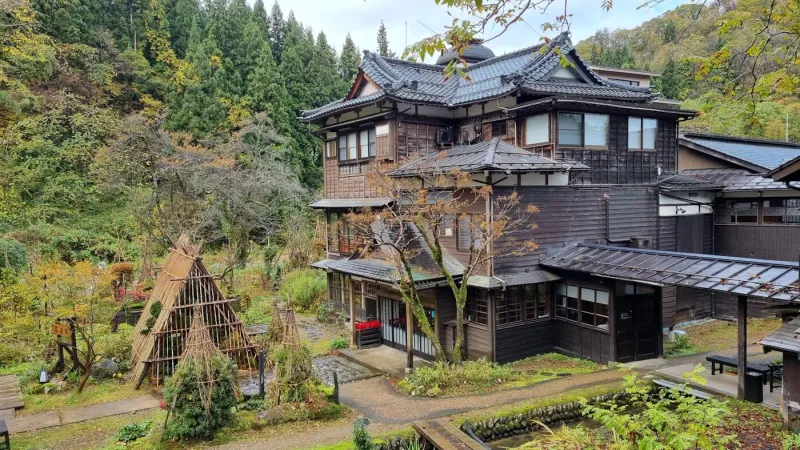
Japan loses rural residents at a pace that feels almost cinematic. Entire neighborhoods of farmhouses sit empty. Elementary schools close. Train lines get trimmed to two runs a day. For decades, the story has been one of slow subtraction — young people leaving, elders staying, and a kind of quiet grief settling over the landscape.
And yet, some Americans look at that landscape and see something else entirely.
Take Marcus, a former graphic designer from Portland who first came to Japan on a cycling trip in his late thirties. He ended up in a small town in Hyogo Prefecture almost by accident — a flat tire, a kind neighbor, a dinner invitation that turned into a week-long stay. Three years later, he sold his apartment and moved.
"I kept thinking about going back," he says. "And eventually I realized I wasn't thinking about Portland at all."
His story isn't unique. Across Japan's countryside — in Nagano, Shimane, Tokushima, Akita — you'll find Americans who arrived for a season and quietly reorganized their lives around staying. Teachers who extended their contracts indefinitely. Hikers who bought farmhouses. Volunteers who showed up for a disaster relief effort and never fully left.
The reasons vary, but certain themes recur: a slower pace, a sense of purpose, a community that still eats dinner together and knows everyone's name.
The Long, Unglamorous Work of Fitting In
Romanticism only gets you so far. The Americans who've genuinely integrated into rural Japanese communities are almost universally quick to describe how hard the first years were — and how different "hard" looked from what they expected.
It wasn't language, exactly, though that mattered. It was something more granular: knowing when to show up, what to bring, when not to speak. Understanding that a neighborhood meeting about irrigation schedules is also a social ritual. Learning that being a good community member sometimes means attending things you don't understand and staying until the end anyway.
Sarah, a former teacher from Ohio who settled in a mountain village in Gifu Prefecture, describes her first year as "mostly just watching." She attended every local event she was invited to, helped with whatever tasks she could, and resisted the urge to suggest improvements. "There's a version of this where the American shows up and immediately wants to fix things," she says. "That version doesn't go well."
Her approach — patient, observant, genuinely curious rather than performatively enthusiastic — is something several long-term expats describe as essential. Rural Japanese communities have a long memory and a finely calibrated sense of who's there for the experience versus who's actually there.
The ones who stayed learned to tell the difference in themselves, too.
What They've Given Back — and What They've Gotten
It would be easy to frame this as a story about Americans saving Japanese villages. That framing is wrong, and most of the people living it would push back hard on it.
What's actually happening is more reciprocal and more interesting. These expats bring things — English fluency that helps villages connect with international visitors, outside perspectives that can reframe old problems, energy that aging communities sometimes need. But they also receive things that are harder to name: a sense of continuity, of mattering to a place, of being known across generations rather than just within a social media feed.
Marcus now runs a small design studio from his farmhouse, taking remote clients while also helping the local tourism association with their materials. He's on the neighborhood cleanup rotation. He knows which elderly neighbors need help carrying things after a snowfall. His kids — he married a woman from a neighboring town — attend the local school and speak the regional dialect.
"I think about what I would have become if I'd stayed in Portland," he says. "I'd probably be doing fine. But I don't think I'd feel like I belonged anywhere."
That sense of belonging — earned, not assumed — is perhaps the most striking thing about these stories. Furusato isn't something you're handed. It's something you build, slowly, through accumulated presence and genuine investment. These Americans found that out the hard way, and most of them say it's the best thing that ever happened to them.
What It Means for the Towns
Japan's government has programs specifically designed to attract new residents to depopulating areas — subsidized housing, relocation grants, even matchmaking services between empty villages and interested newcomers. The results have been mixed, partly because relocation is easy and integration is hard.
What the Americans who've stayed seem to offer isn't just a body counted against a declining population statistic. It's a kind of proof of concept — evidence that a place still has something worth coming to. That it can hold someone from the outside. That it has a future, not just a past.
For the communities themselves, that proof matters. Younger Japanese residents who might otherwise leave sometimes stay a little longer when they see outsiders choosing to arrive. Festivals get documented. Old crafts get photographed and shared. The village starts to see itself through slightly different eyes.
None of this is a solution to the structural forces draining Japan's countryside. But it's something. A small, human-scaled counter-current.
And for the Americans themselves? They've found their furusato. Just not where anyone expected.