Every Stitch Tells a Story: How to Read Japan's Regional Crafts Like a Local
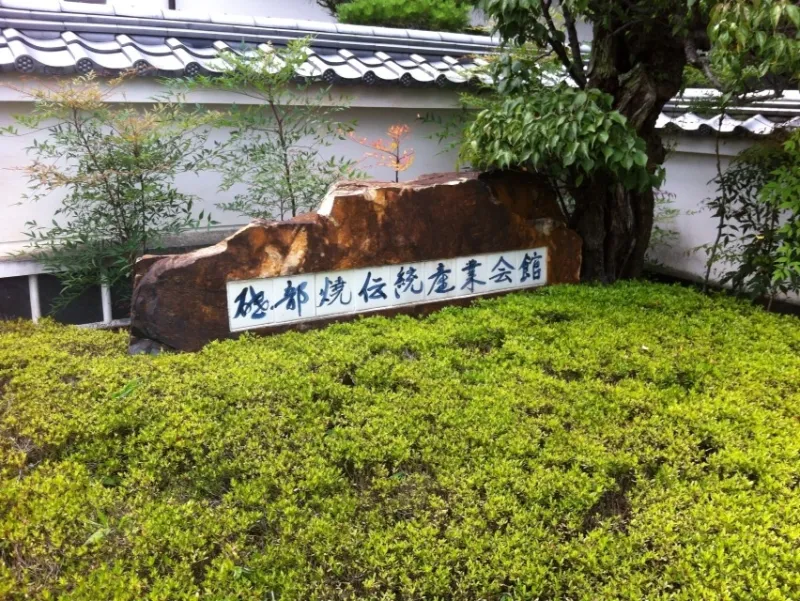
Photo: oddstranger, CC BY-SA 2.0, via Wikimedia Commons
Somewhere in a craft market in rural Kyushu, a visitor picks up a small ceramic cup, turns it over in their hands, and puts it back down. Too expensive, maybe, or just not sure what to do with it. That moment happens hundreds of times a day across Japan's regional towns and festival stalls. And almost every time, something genuinely remarkable gets missed.
Because that cup isn't just a cup. It's a document.
Japan's regional handicrafts — its pottery, textiles, lacquerware, basketry, and paper — are among the most information-dense objects you'll ever hold. They carry the fingerprints of geography, the memory of trade routes, the logic of a local climate, and the values of communities that have been refining these forms for centuries. For American visitors trying to get past the surface of Japanese culture and into something real, learning to read these objects is one of the most direct paths available.
You don't need to be an art historian. You just need to know where to look.
Why Objects Remember What People Forget
Oral histories fade. Festivals get modified. Even architecture gets torn down and rebuilt. But a ceramic tradition that's been firing the same way for four hundred years carries continuity that's hard to argue with.
Take Mashiko ware from Tochigi Prefecture. The clay there is coarse and iron-rich, which gives finished pieces their characteristic earthy brown tones. That's not an aesthetic choice — it's geology. When the famous potter Shoji Hamada settled in Mashiko in the 1920s, he wasn't just drawn to the scenery. He was drawn to what the land produced. The roughness you feel in a Mashiko pot isn't a stylistic quirk. It's a direct communication from the soil of that specific valley.
Or consider Bizen ware from Okayama, one of Japan's oldest unglazed pottery traditions. Bizen pieces are fired slowly in wood-burning kilns for up to two weeks. The ash from the kiln settles on the surface and melts into the clay, creating unpredictable markings called hidasuki and goma. No two pieces are identical. That unpredictability isn't a flaw — it's the entire philosophy. Bizen aesthetics are built around accepting what the fire decides. For communities shaped by agricultural uncertainty and seasonal risk, that wasn't just art. It was a worldview made tangible.
Textiles as Maps of a Place
If pottery encodes geology and climate, textiles tend to encode economy and social structure.
Kyoto's Nishijin weaving district produced silk fabrics for the imperial court for over a thousand years. The complexity of Nishijin-ori patterns — some requiring hundreds of individual warp threads — reflects the demands of a clientele that measured status in visual intricacy. Looking at a traditional Nishijin obi sash is like reading a ledger of power. Every gold thread placed just so was a statement about who was wearing it and why that mattered.
But move to the rural northeast and the language shifts completely. Tohoku's kogin-zashi embroidery from Aomori Prefecture developed among farming communities who were prohibited by sumptuary laws from wearing silk. They worked instead with indigo-dyed hemp cloth, stitching white cotton thread into dense geometric patterns to add warmth and durability to their garments. Those patterns — passed down through generations of farming families — weren't decorative flourishes. They were practical solutions that became identity markers. Specific villages developed specific patterns. A woman's kogin work was recognizable to neighbors the way a face is recognizable.
When you hold a piece of kogin embroidery and understand that context, the object transforms. It stops being a nice textile and starts being a record of resilience.
What the Shape of a Tea Bowl Tells You
Tea culture gives us maybe the most loaded objects in all of Japanese craft.
The tea bowl — the chawan — looks simple. It's a bowl. But the tradition of wabi-cha, the austere tea ceremony developed in the 16th century by Sen no Rikyu, turned the tea bowl into a philosophical statement. Rikyu famously preferred rough, irregular Korean peasant bowls over the polished Chinese ceramics that wealthy patrons favored. That preference was a political act. It said that authenticity and simplicity mattered more than imported prestige.
That tension still lives in chawan design today. A tea bowl from Hagi in Yamaguchi Prefecture will typically be softer, more irregular, and warmer in tone than one from Kyoto — reflecting Hagi's relationship with Korean ceramic traditions brought over in the 16th century. A Raku ware bowl from Kyoto will feel almost impossibly light and hand-formed, because it was pinched rather than thrown on a wheel. Each of these choices has a lineage. Each one points somewhere specific on a map and somewhere specific in history.
How to Actually Do This as a Visitor
Reading objects as cultural texts doesn't require a guidebook — though a good one helps. It requires slowing down and asking different questions.
Instead of how much does this cost, try what is this made from and where does that material come from. Instead of is this pretty, try what problem was this originally solving. And instead of is this authentic, try what was happening in this region when this tradition developed.
Many of Japan's regional craft centers and traditional industry halls — often found in smaller cities that American tourists skip entirely — have excellent interpretive displays that walk visitors through exactly this kind of context. The Japan Traditional Crafts Aoyama Square in Tokyo is a useful starting point if you want an overview before you travel regionally. But the real learning happens on the ground, in the towns where these traditions live.
Talk to shopkeepers. Ask them which patterns are specific to the area versus which are made for tourist markets — most will tell you honestly, and the distinction matters. Visit kilns or weaving workshops if they're open. Watch the process. The object you hold afterward carries a completely different weight.
Why This Changes How You Experience a Place
There's a concept in Japanese culture called mono no aware — roughly translated as the bittersweet awareness of impermanence. It's the feeling of a cherry blossom falling, or an old neighborhood changing. A lot of Japan's regional craft traditions carry that feeling in their bones, because many of them are genuinely endangered. The makers are aging. The apprentices aren't always materializing.
When an American visitor picks up a piece of Onta ware or a length of Tokushima indigo cloth and understands what they're holding — not just aesthetically but historically and culturally — something shifts. The object connects to a place and a community in a way that a souvenir never quite does.
That's what regional craft can do at its best. It turns a hometown you've never visited into somewhere you suddenly, unexpectedly understand. And in a country as layered and regional as Japan, that kind of understanding is worth more than any itinerary.
The objects are already talking. You just have to learn to listen.