What a Rotting Roof Can Remember: Inside Japan's Abandoned Homes and the Americans Who Won't Let Them Go
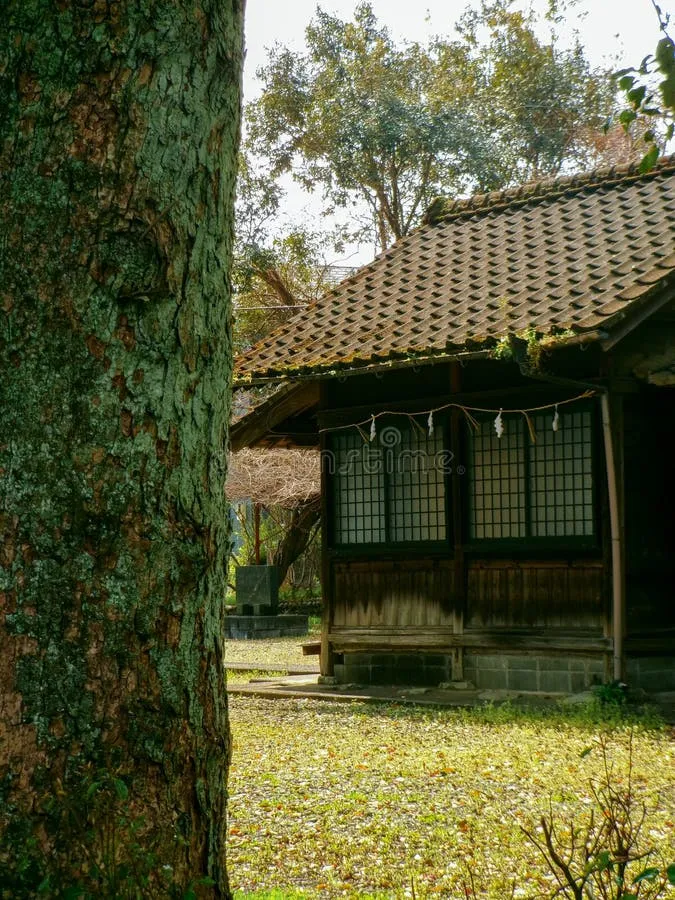
Photo: abandoned traditional Japanese wooden house rural countryside overgrown garden, via thumbs.dreamstime.com
The sliding door hadn't been opened in eleven years. You could tell by the way the wood had swollen into the frame, by the spider silk stretched across the handle like a warning. When Mara Hutchins, a landscape architect from Portland, finally worked it loose on a gray morning in Hyogo Prefecture, the smell that came out wasn't decay exactly. It was more like a held breath — cedar, old paper, something faintly sweet she couldn't name.
"I stood there for a long time before I went in," she said. "It felt like the house was deciding whether to let me."
Mara had come to Japan the way a lot of Americans do lately — not for the cities, not for the cherry blossoms, but for something harder to explain. She'd read about akiya, the Japanese word for vacant or abandoned houses, and found herself fixated. There are over nine million of them across Japan, a number that keeps climbing as rural populations age and young people keep moving toward urban centers. Some sit empty for decades. Some collapse slowly into their gardens. Some are given away for next to nothing through municipal akiya banks, hoping someone — anyone — will care enough to stay.
Mara bought one. But that's getting ahead of the story.
The Architecture of a Life Left Behind
An akiya isn't like an American abandoned house. It doesn't usually look dramatic from the outside. No broken windows, no graffiti, no caved-in porch. Japanese residential construction tends toward discretion, and even in neglect, these homes retain a kind of dignity. What signals abandonment is subtler: a garden that's gone soft and wild, a mailbox overstuffed with circulars no one will ever read, a rain chain that's turned entirely green.
Inside is where time becomes visible. Calendars stopped in specific months. Medications lined up on bathroom shelves. A child's report card tucked into a drawer. Family photographs still on the walls, the faces staring out at whoever comes next with an expression that reads, in every language, as we were here.
For visitors with a preservation instinct — and Americans, shaped by a culture that tends to fight decay rather than accept it, often have that instinct in abundance — these interiors can feel almost unbearably intimate. You're not just walking through an empty building. You're walking through the aftermath of someone's entire domestic world.
"In the States, when a house gets abandoned, it pretty quickly becomes a liability," said Derek Cano, a contractor from Albuquerque who has been documenting akiya on a personal blog for three years. "Here it's more like... the house is grieving. Nobody rushed in to strip it or flip it. It just sits with what happened."
How Japan Thinks About Impermanence
There's a concept worth understanding before you judge the decay: mono no aware. It's often translated as "the pathos of things" — a bittersweet awareness of impermanence, a tenderness toward what is passing or already gone. It shows up in the Japanese appreciation of cherry blossoms precisely because they fall so fast, in the aesthetic of wabi-sabi that finds beauty in the worn and the weathered.
Applied to architecture, this shapes an attitude toward old buildings that can genuinely confuse Western visitors. In the US or Europe, a crumbling historic home tends to trigger either a rescue effort or a demolition permit. In rural Japan, a third path is more common: leaving things be, allowing a structure to return to the earth at its own pace, treating the decay itself as a kind of natural conclusion rather than a failure.
This isn't indifference. It's a different framework for what a building's end means.
"Japanese friends would ask me why I was so upset about the house falling apart," Mara said with a laugh. "And I kept trying to explain that it felt like losing something. They'd nod and say yes, exactly — and they seemed at peace with that in a way I couldn't quite get to."
When the Preservation Instinct Meets a Different Philosophy
The tension Mara describes is real, and it plays out in interesting ways when Westerners start getting involved in akiya restoration. Local governments are often genuinely grateful — these houses are a logistical headache, an eyesore, sometimes a safety risk. Foreigners willing to sink money and time into a crumbling farmhouse are welcomed with something close to relief.
But the restoration conversation can get complicated. Some American buyers arrive with a vision shaped by HGTV and historic preservation boards: strip it back to the bones, keep the original materials, restore it to a specific moment in time. Japanese neighbors and local craftspeople sometimes have a different read — repair what needs repairing, adapt what needs adapting, and don't be precious about mixing old and new.
"There was a whole negotiation about the kitchen," said Mara. "I wanted to keep the original kamado hearth as a centerpiece. The local carpenter thought that was a little theatrical. He said, 'It's a kitchen. You should be able to cook in it.' We compromised."
Derek has seen similar friction in the stories he's collected. "Americans want to preserve the 'authenticity.' But authenticity in a lived Japanese home often means it was always being updated, always changing. The idea of freezing it at one moment is actually kind of foreign to how these places were used."
What These Houses Are Actually Holding
Maybe the most striking thing about spending time in akiya is what they reveal about memory as a physical phenomenon. We tend to think of memory as something that lives in the mind, in stories, in photographs. But these houses make a different argument: that memory also lives in construction, in the particular way a doorframe was fitted, in the depth of a worn threshold stone, in the height of a window that was clearly built for someone shorter than you.
When a house like this disappears — demolished, collapsed, or simply locked up until nothing is left — something genuinely unrepeatable goes with it. Not just a building. A whole grammar of daily life.
For American visitors, particularly those who've grown up in a country where old buildings are routinely cleared for new development, walking through an akiya can feel like an unexpected reckoning. These structures ask a question we don't often sit with: What do we owe to what came before us?
Mara is still working on her house in Hyogo. The roof took most of the first year. The garden is coming back slowly. She's learned enough Japanese to have real conversations with the elderly neighbor who remembers the family that lived there before.
"He told me the grandmother used to grow shiso along that back wall," she said. "So I planted some. It felt like the right thing to do. I don't know if that's preservation or something else. Maybe it's just — continuing."
That might be as good a definition as any. Not rescuing. Not freezing. Just showing up, opening the swollen door, and deciding the story isn't finished yet.