Dying Alone in Japan: What the Concept of Kodokushi Is Really Telling Us

Photo by Photo by Sixian Li on Unsplash on Unsplash
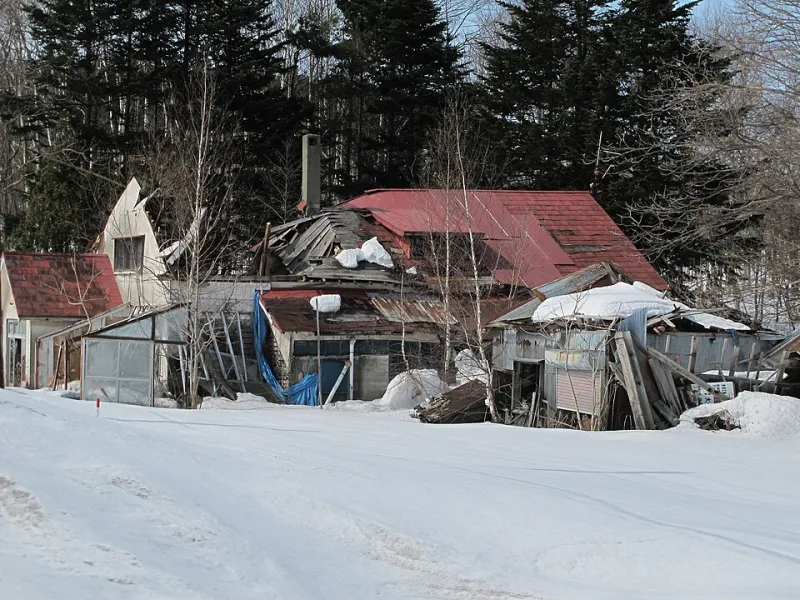
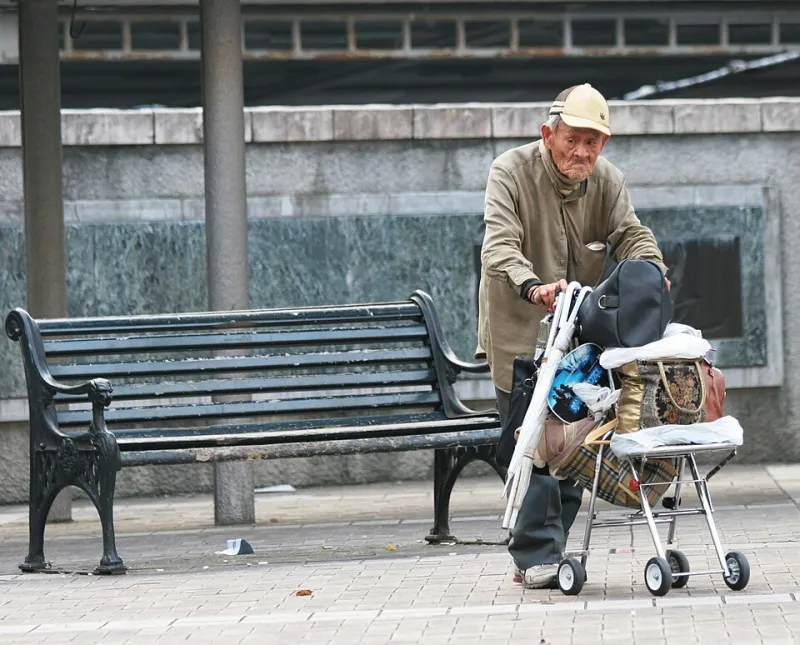
There's a word in Japanese that most translation apps will render as "lonely death." It's kodokushi — written with characters meaning solitary and death — and it refers specifically to people who die alone at home, sometimes undiscovered for days, weeks, or longer. In Japan, it's not a fringe concern. It's a documented social phenomenon, tracked by local governments, studied by sociologists, and increasingly, confronted by the foreign residents who move to rural communities expecting quiet charm and instead find themselves sitting with something far heavier.
For Americans, the instinct is often to frame kodokushi as a policy failure. A healthcare problem. Maybe a consequence of Japan's aging population crisis, which it partly is. But spend enough time talking to expats who've actually lived alongside this reality — in the depopulating mountain towns of Nagano, the coastal villages of Akita, the rice-farming hamlets of Shimane — and a different picture starts to form. One that says less about Japan's failures and more about the things Western culture tends to celebrate without questioning.
The Discovery That Changes Everything
Megan Sorrell moved to a small town in Hyogo Prefecture six years ago on what she describes as "a total whim and a one-way ticket." She'd been working in marketing in Chicago, burned out, and drawn to Japan after a two-week vacation that felt more like a homecoming. She settled into a renovated kominka — one of Japan's old farmhouses — and started learning the rhythms of her neighborhood.
About eight months in, she noticed a smell coming from the house next door. She didn't understand what it was at first. A neighbor did.
"The man who lived there had been dead for almost three weeks," she says. "He had family — adult children — but they lived far away. He hadn't wanted to burden them. He'd stopped answering calls and they assumed he was just being private. That was how they'd always known him."
Sorrell says the experience didn't horrify her the way she might have expected. Instead, it opened a slow, uncomfortable question that she's still sitting with. "I kept thinking: would anyone notice if that happened to me? And then I thought — would I want them to? Back home, I would have said I valued my privacy. I would have meant it as a compliment to myself."
Not a Crisis. A Mirror.
Dr. Yuki Hashimoto, a cultural anthropologist who has spent two decades studying social isolation in rural Japan, is careful about how she explains kodokushi to Western audiences. "People hear 'lonely death' and they immediately want to solve it," she says. "They want to build apps, create check-in systems, send volunteers. And those things matter. But the phenomenon itself is telling us something that can't be fixed with logistics."
What it's telling us, she argues, is that the architecture of belonging in Japan — the intricate, sometimes suffocating web of neighborhood associations, seasonal rituals, communal obligations — was doing more structural work than anyone fully appreciated until it started to unravel. As younger generations moved to cities, as traditional community ties loosened, the informal safety net that had always caught people quietly began to fray.
"In the United States," Hashimoto notes, "you often celebrate not needing anyone. Self-sufficiency is a virtue. In Japan, historically, needing people was the point. Community wasn't just nice to have. It was survival infrastructure."
For Americans raised on the mythology of rugged individualism — the lone pioneer, the self-made success story — this is a genuinely destabilizing idea. Not because it's foreign, but because it holds up a mirror.
What Expats Start to See Differently
Tom Breckenridge, a retired high school teacher from Oregon who's lived in a rural Shimane village for four years, describes a gradual shift in how he thinks about his own life choices. He moved to Japan partly for adventure, partly because property was affordable, partly because he liked the pace. He didn't move there to have his assumptions about aging and mortality rearranged.
"Back home, I was proud of being low-maintenance," he says. "I didn't want to be a burden on my kids. I had my retirement savings, my health insurance, my plan. I thought that was responsible."
In Japan, he started attending neighborhood association meetings — chōnaikai — mostly out of curiosity. He helped carry portable shrines during summer festivals. He showed up to community clean-up days. And slowly, almost without noticing, he became woven into something.
"One of my neighbors, an 80-year-old woman named Fumie-san, checks on me," he says with a laugh that sounds a little like wonder. "She brings me vegetables from her garden and she checks on me. I used to think I didn't need that. Now I think — what was I even protecting by not wanting it?"
This is the quiet reorientation that kodokushi seems to trigger in the Americans who encounter it up close. It's not about romanticizing Japan or pretending traditional community structures don't have their own costs — the pressure to conform, the lack of privacy, the weight of obligation. It's about recognizing that the Western default of prizing independence above all else carries its own costs, ones that tend to stay invisible until they don't.
The Obligation Question
One of the most uncomfortable corners of the kodokushi conversation involves family. In many documented cases, the person who died alone had living relatives. Adult children who called sometimes. Who meant to visit. Who assumed their parent was fine because their parent had always seemed fine, or had always made a point of not complaining.
In American culture, there's a whole framework for this. Respecting elders' autonomy. Not being helicopters. Letting people age on their own terms. These aren't bad values. But they can function, Hashimoto points out, as permission structures — ways of letting ourselves off the hook that we dress up in the language of respect.
"Japan is grappling with the same tension," she's quick to clarify. "This isn't a Japan-versus-America story. It's a modernity story. When economies require mobility, when families scatter, when individuals are expected to be self-contained units — these are the results. Japan is just further along in some of the consequences."
What Belonging Actually Costs
Sorrell, the Chicago transplant in Hyogo, has started volunteering with a local welfare check program — a network of neighbors who regularly visit elderly residents living alone. It's unglamorous work. Sometimes it's just dropping off a flyer and chatting for ten minutes. Sometimes it's noticing that the mail has piled up.
"I used to think belonging somewhere was something that happened to you," she says. "Like you either fit or you don't. Now I think it's something you have to keep doing. It takes time and it's sometimes awkward and you have to show up even when you don't feel like it."
That's probably the most honest translation of what kodokushi is really about — not the deaths themselves, but the slow accumulation of small absences that precede them. The skipped festival. The unreturned call. The neighbor you never quite learned the name of.
Japan didn't invent this problem. But in its quietest, most depopulated corners, it's made it impossible to look away from. For the Americans who've stopped looking away, that turns out to be a gift — strange and heavy as it is.